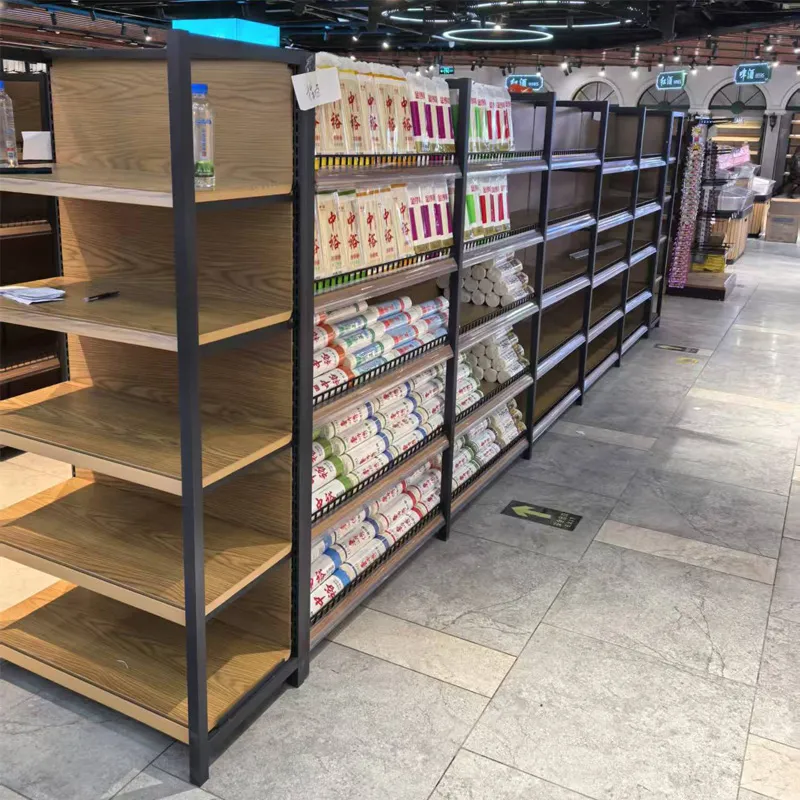
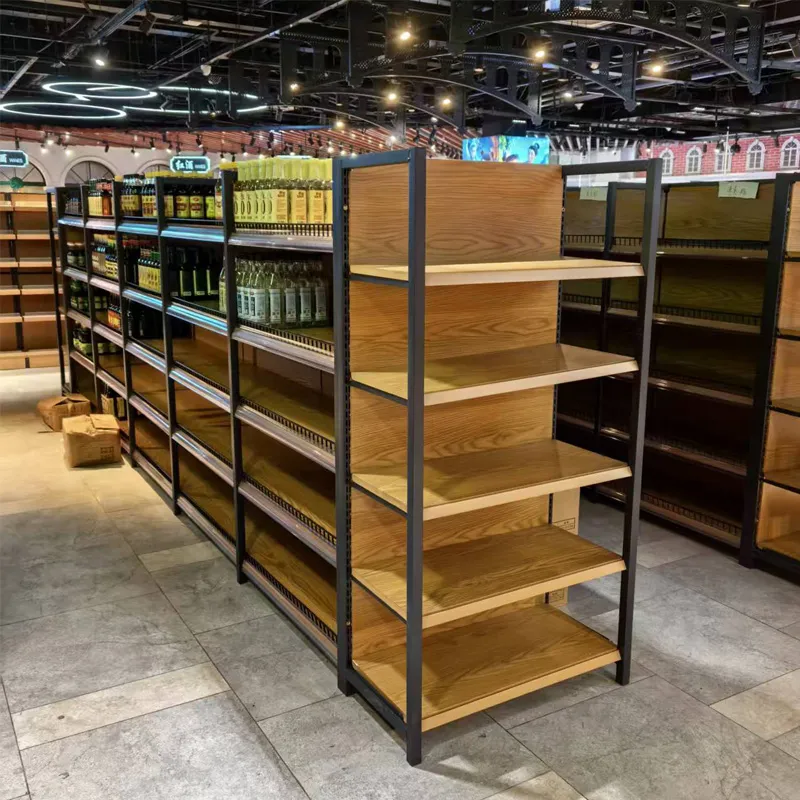
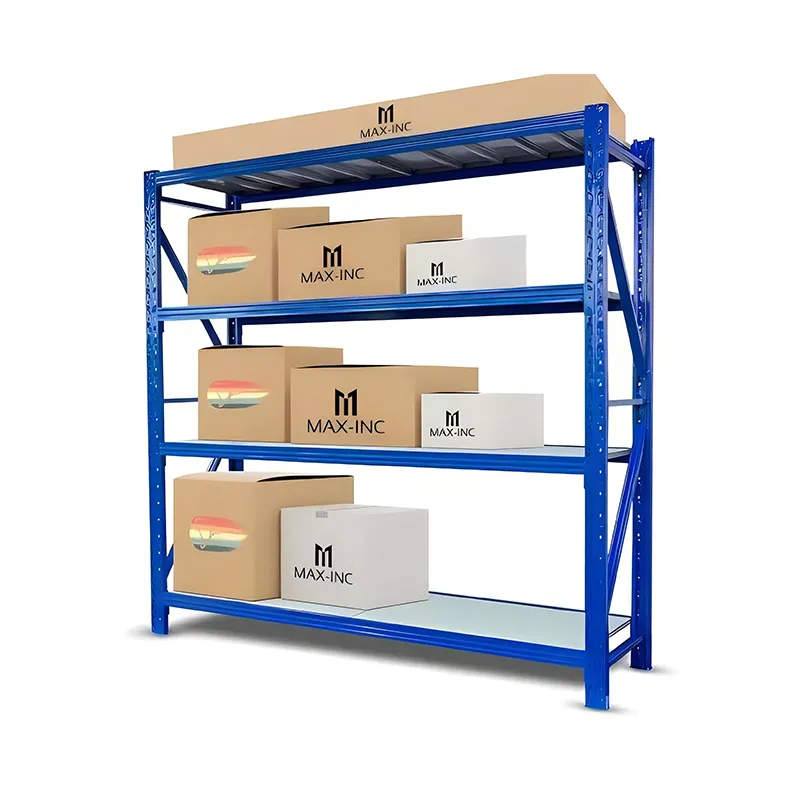
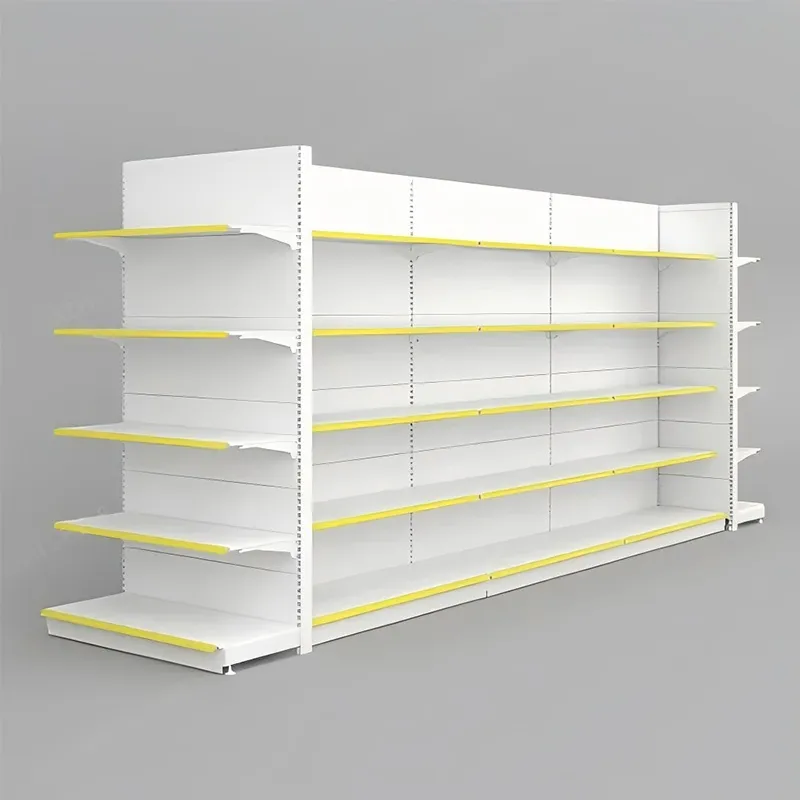
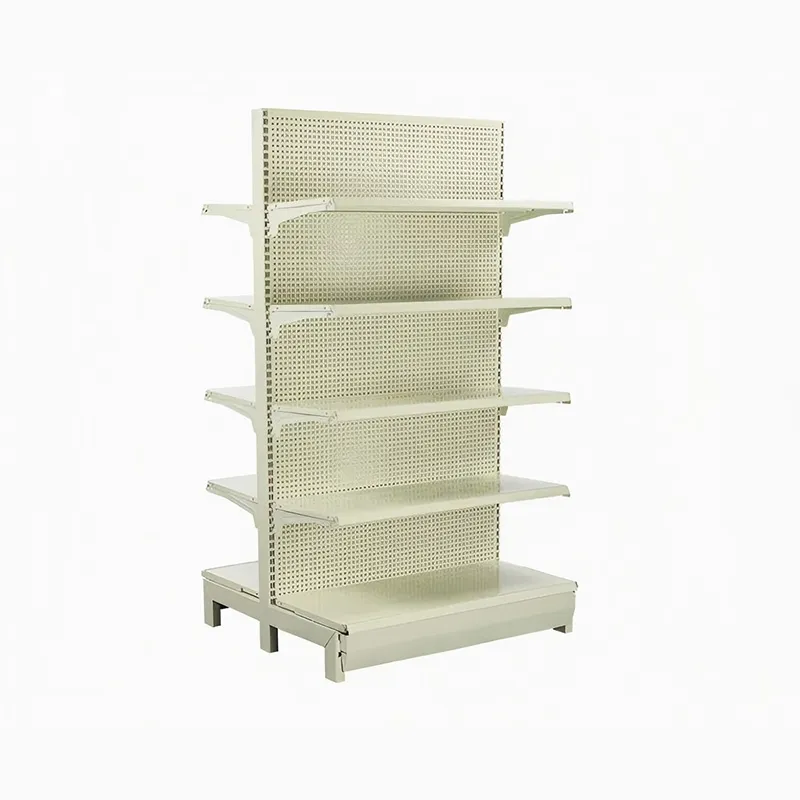
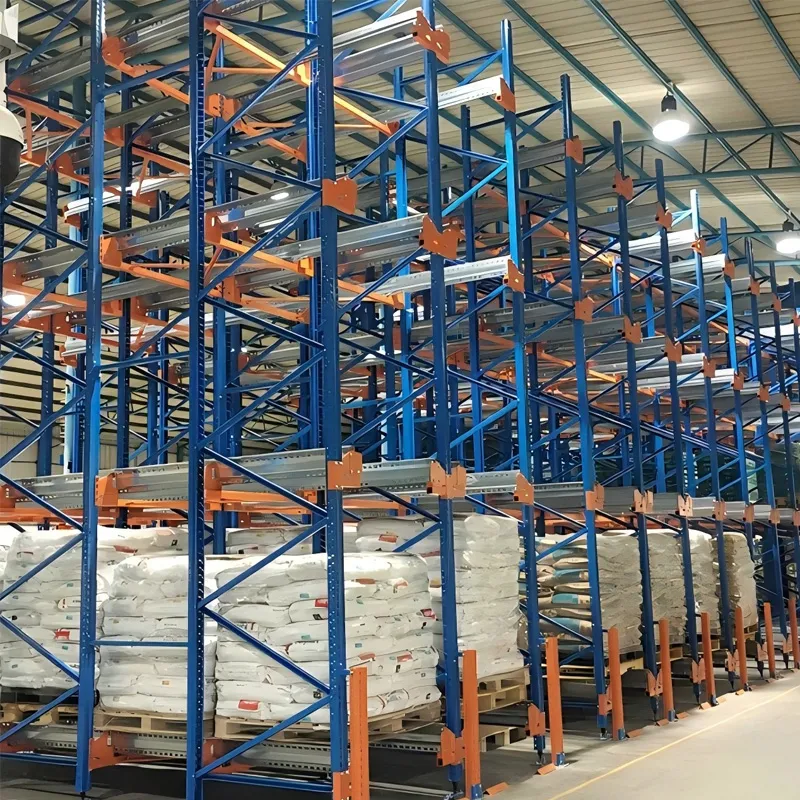
When you hear “double-sided shelving with a mesh back?”, the first thing that comes to mind for many customers is simply shelves separated by a grid. A blunder, which then costs a lot in the warehouse. In fact, this is an entire engineering concept where every detail - from the profile of the rack to the size of the mesh cell - works for overall rigidity and safety. The mesh back isn't just for show, it prevents small stock keeping units (SKUs) from spilling through the back, which is critical when packing tightly on both sides. But if you make a mistake with the thickness of the wire or the way it is attached to the frame, the whole design loses its meaning. I myself saw how at one of the objects, under load, the mesh began to “play”, catching the goods - the entire line had to be redone. It’s these nuances that are not written in catalogs that I want to speculate about.
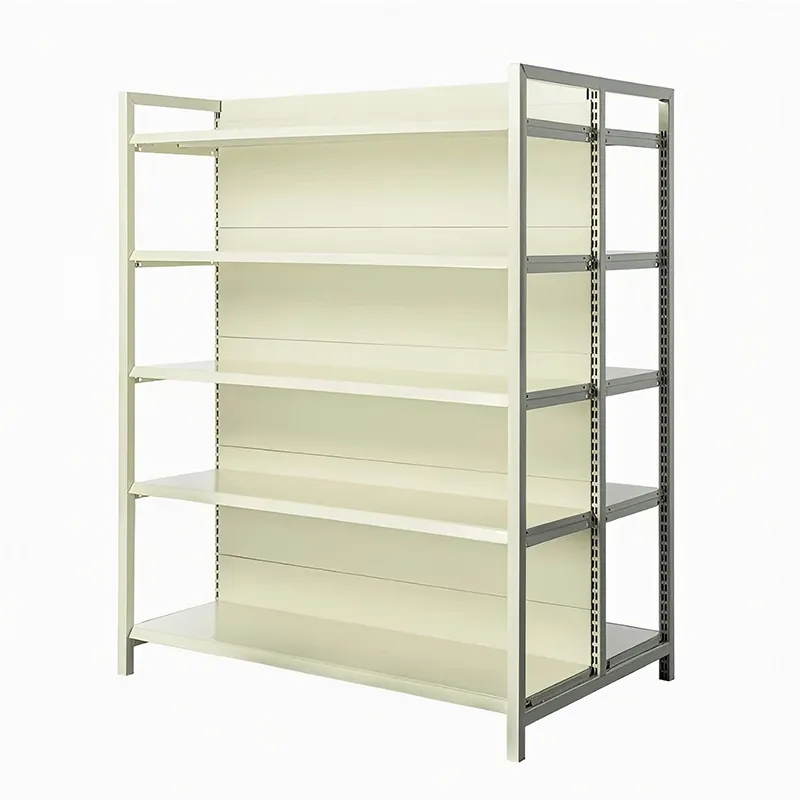
So, let’s take a classic problem: we need a high, dense warehouse for light, but multi-format boxes. The client wants to make the most of the cube. The choice falls onreversible shelving with mesh back. It would seem that everything is simple. But the first stone is load calculation. The mesh creates windage, plus adds its own, albeit small, mass. If the designer mechanically takes the data for conventional double-sided shelving and simply “adds on?” mesh may lack stability. This is especially felt at heights of 6 meters. We had a precedent: at the testing stage, the prototype had an acceptable backlash, which was within the limits according to the standards, but visually seemed frightening to the operators. It was necessary to strengthen the fastening points of the mesh to the beams without changing the main frame.
The second point is the grid itself. Galvanized, powder painted, cell 50x50 or 25x25? Depends on the product. For small packs 50x50 is already a risk. But the smaller the cell, the more expensive and heavier the design, plus more shading, which can be important for marking. We often make a compromise: we make the lower tier, where they are assembled more often, with a small cell, the upper one with a large cell. But this complicates production. Some colleagues from other companies save money by installing the mesh only up to a certain height, but this, in my opinion, is a half-measure that violates the integrity of the system.
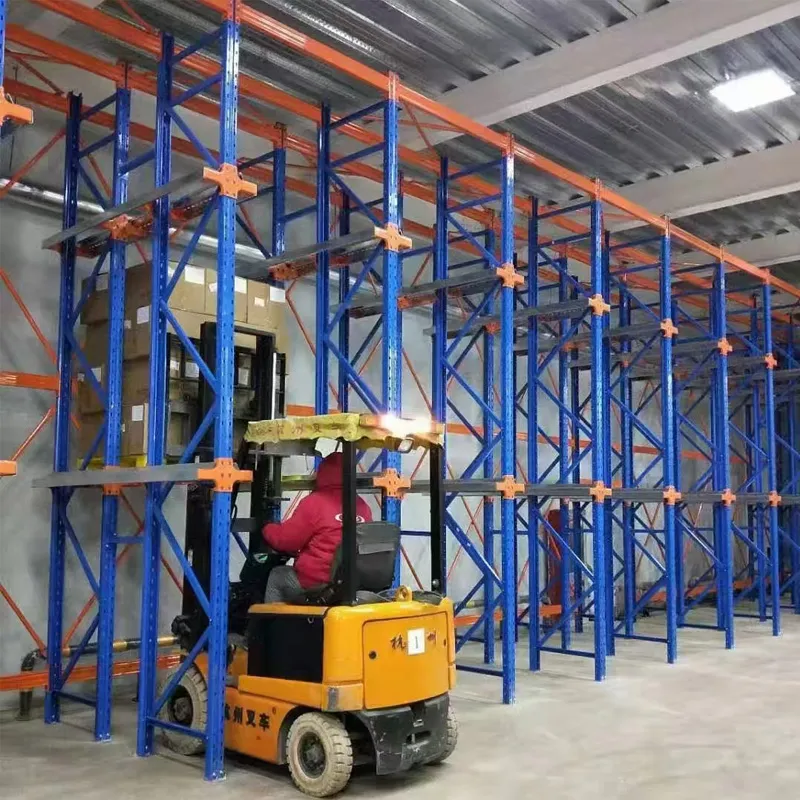
And the third, most unobvious pitfall is compatibility with loading equipment. A forklift driving into an opening can catch the mesh on the side if the distance is calculated without taking into account its convexity. The standard 100mm gap is sometimes insufficient. After several incidents at other people’s sites, we began to lay down a minimum of 120 mm from the fork dimensions to the mesh plane. It’s a small thing, but it saves you from thousands of rubles for repairs after the first month of operation.
Here it is appropriate to remember?Harbin Jusheng Metal Structure Manufacturing Co.,Ltd.. With their productiondouble-sided shelving with mesh backI encountered this about three years ago, when I was looking for an alternative for a project with a tight budget, but without loss of quality. Their websitehttps://www.jshj.rupositions them as a major full-service player, and that's important. Why? Because for such racks the unity of the cycle is critical: design, cutting, bending, mesh welding, galvanizing, assembly. If the mesh is ordered externally, problems with compatibility of fasteners begin.
What specifically attracted you to working with them? They did not immediately sell the finished catalog. Their engineer requested a detailed technical specification, including not only the dimensions and load, but also the type of forklifts, the average weight of the box, even the climatic conditions of the warehouse (in winter the gates are open, humidity changes are possible). As a result, they proposed a non-standard solution: to use wire for the mesh not 4 mm, but 5 mm in diameter, but with a wider cell in the upper third of the rack. This saved weight and improved visibility without sacrificing strength where it was needed. Their factory site is 20,000 sq. m. in Pingfang allowed them to manufacture and paint everything in one place, which we checked by selectively measuring the thickness of the coating - the deviations were minimal.
However, not everything went smoothly. In the first batch, the mesh mounting brackets had a bolted connection, which required extra time during assembly. We gave feedback. The next time, for a similar order, they offered an option with latches-locks of their own design, which speeded up installation by 15%. This is an indicator that production is alive and adaptive. Their specialization in the entire spectrum of racking systems, from retail to shuttle, apparently gives them the very basis for cross-industry solutions.
Let's say the racks have arrived. Perfectly packaged, with markings. But then the assembly begins, and it turns out that the concrete floor has a slope of 2 degrees, which was not taken into account in the original plan. For regular shelving, this is compensated for by adjusting screws, but when you havereversible shelving with mesh back, connected in a single row, the rigidity is higher, and it is more difficult to compensate for the distortion. We have to “play” sequence of tightening connections. We developed a rule: first align and secure the first section level, then, when attaching the next one, leave the fastening of the beams slightly loose until the entire row is assembled. And only then comes the final tightening. It takes a long time, but it prevents internal stress.
Another field problem is damage to the mesh during unloading. The edges of the mesh, even curved ones, sometimes cling to the cables or to each other. Once we received several sections with dents. The solution turned out to be simple: in production (?Jusheng?, by the way, this was also implemented after our case) they began to use soft PVC corners for the duration of transportation. It’s a small thing, but it’s these little things that make up the impression of a product.
And of course, interaction with logisticians. Long sections of mesh backrest require special placement in the truck. If movers are not warned, they can place heavy boxes with other components on top and bend the structure. Now we always either accompany the cargo with our own person, or make a detailed stowage diagram with pictures for the driver. This is not a mere formality, but a necessity.
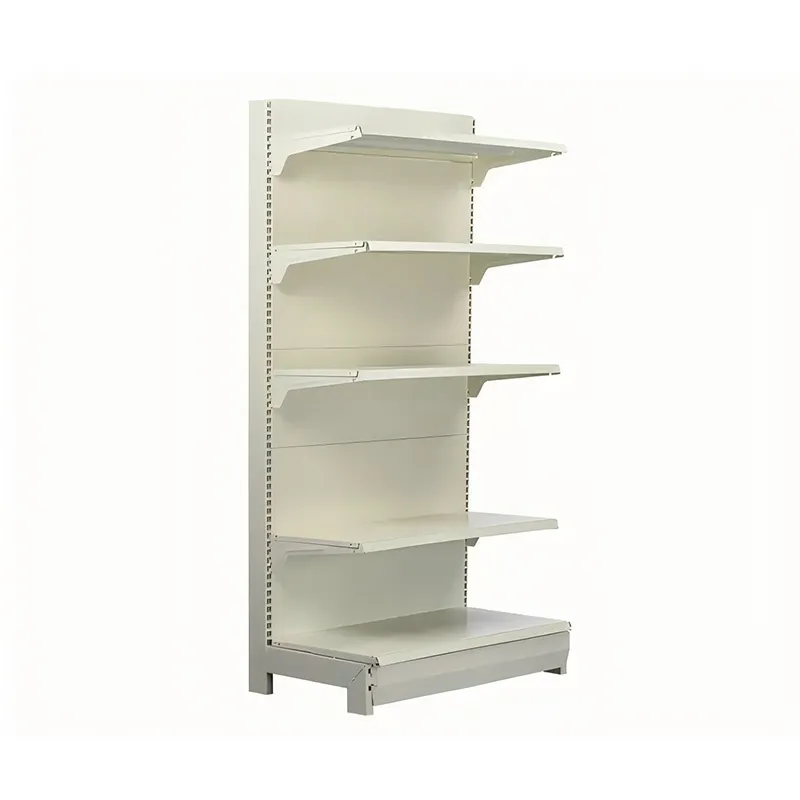
Is it always worth choosing?reversible shelving with mesh back? No, this is a specialized solution. They are significantly more expensive than conventional shelf or even solid double-sided racks due to the complexity of manufacturing the mesh and its installation. Their benefits are revealed only in specific scenarios. For example, storing textiles in boxes, small household appliances, books - where there is a risk of a unit falling out through the back wall when removing an adjacent item. Or in warehouses with high turnover, where there is constant movement on both sides.
We had a bad experience when we persuaded a client to install such racks for storing large tires. The argument was “for better ventilation?”. But the mesh didn’t work there at all, the load was lateral, and the main work was done by the frame. The client overpaid for an unnecessary feature. After this, we always conduct a SKU analysis: if 95% of the product is large and heavy, a mesh back is overkill. Conventional solid backboards or even contour ties are sufficient.
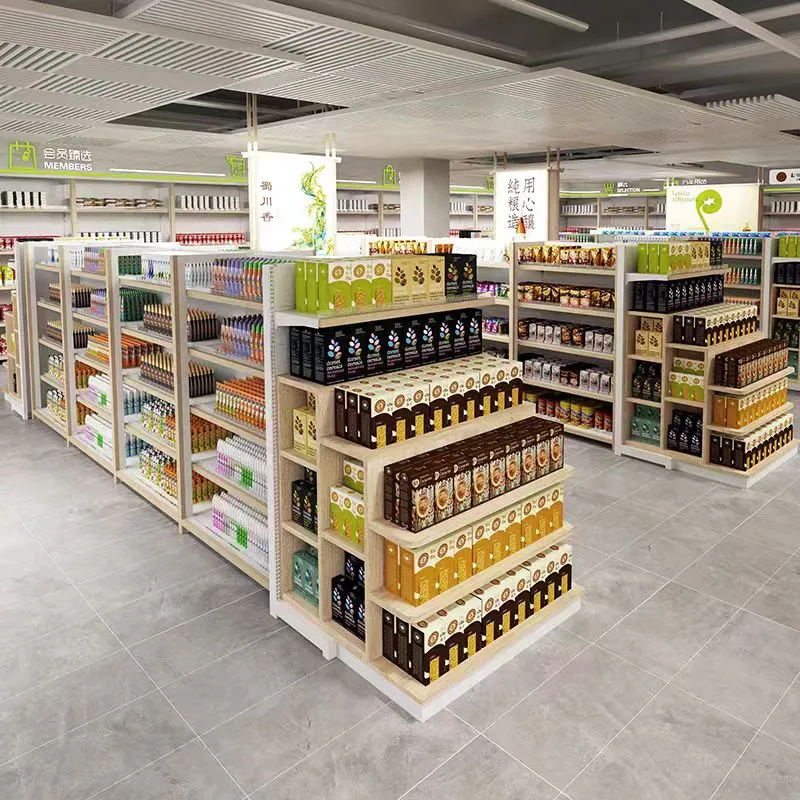
On the other hand, for a small-box pharmaceutical warehouse, this is sometimes the only option to meet accessibility and visibility requirements without installing separate partitions. Here, the savings on the staff of controllers can cover the difference in price in a couple of years. It is not the cost of the rack that needs to be considered, but the total cost of ownership.
Interestingly, technology does not stand still. Classicreversible shelving with mesh backare starting to get alternatives. For example, some manufacturers are experimenting with perforated steel sheets instead of mesh. The rigidity is higher, installation is easier, but visibility and breathability suffer. So far, for most tasks, the grid remains optimal in terms of price/functionality ratio.
Another trend is modularity. The mesh is not made for the entire span, but in sections that can be removed and rearranged as the warehouse configuration changes. This seems logical, but it adds points of attachment—potential points of weakness. In my opinion, this is excessive for static warehouses. But for logistics centers that are rebuilt once a year, it may be justified.
What will definitely develop is coating materials. Standard galvanization or polymer coating may not withstand aggressive environments (for example, refrigeration chambers with constant condensation). There are already requests for stainless steel or special compositions for the mesh, but the price is high. Perhaps this is precisely the advantage of large factories likeLLC ?Harbin Jusheng?- they can afford to experiment with different coverage lines over their large area and then offer more favorable conditions for niche orders.
In the end, back to the beginning.Reversible shelving with mesh back- this is not “just a rack?”. This is a tool that requires deep understanding both on the part of the manufacturer (here the experience of Jusheng is indicative) and on the part of the designer and installer. Errors in details are costly here, but a well-designed and installed system will work for decades, requiring virtually no attention. The main thing is not to chase fashion or seeming cheapness, but to consider each parameter for a specific task. As they say, a stingy man pays twice, and in a warehouse he also loses in turnover.