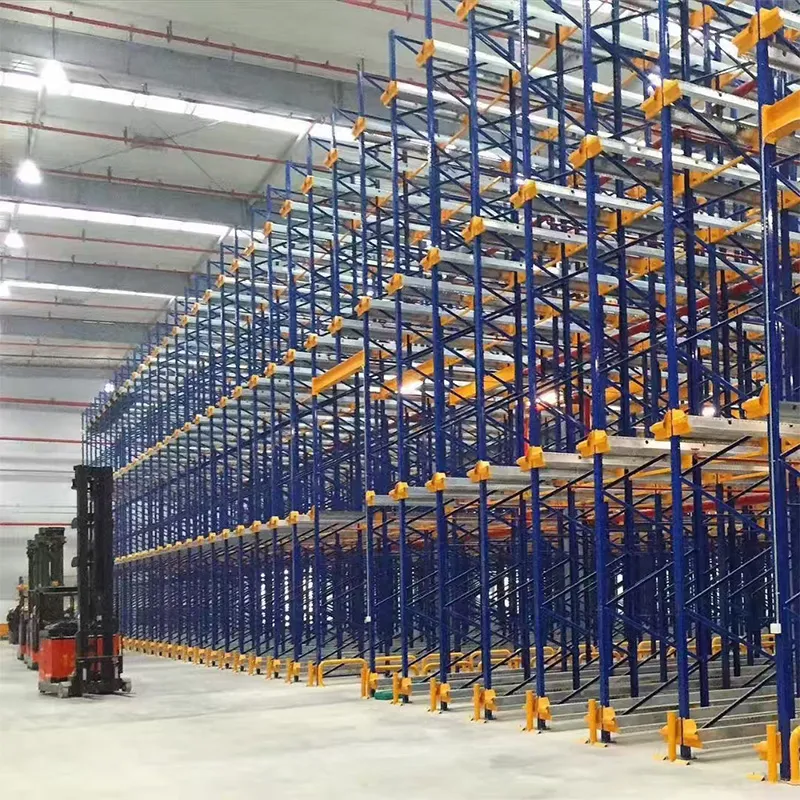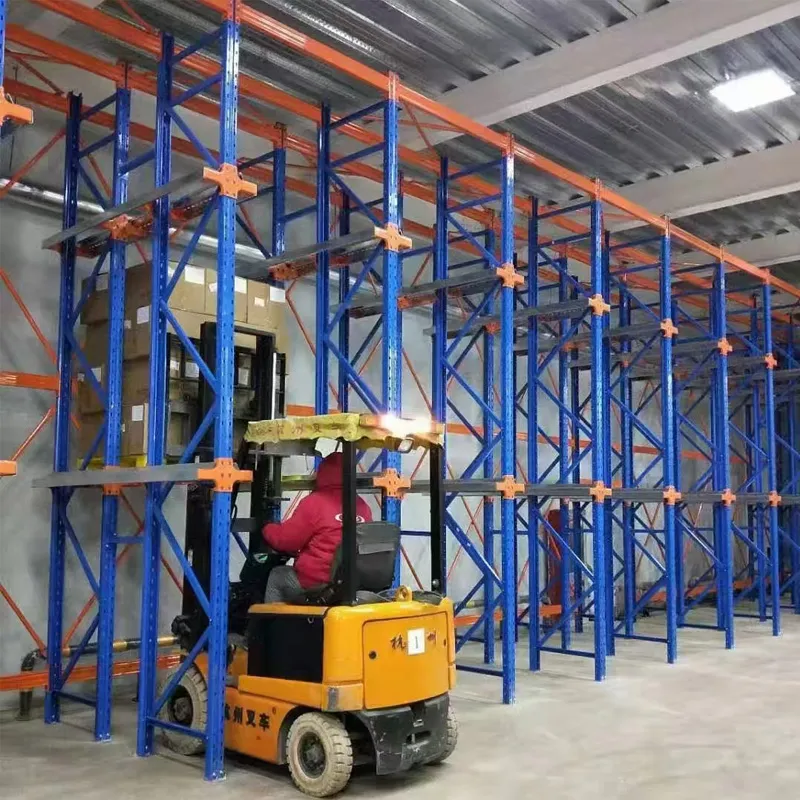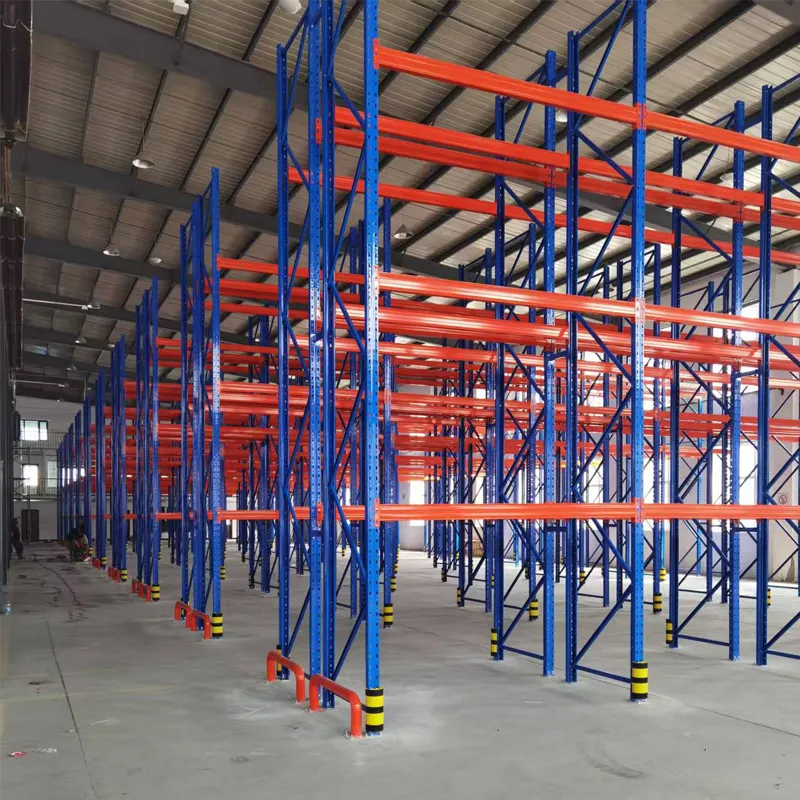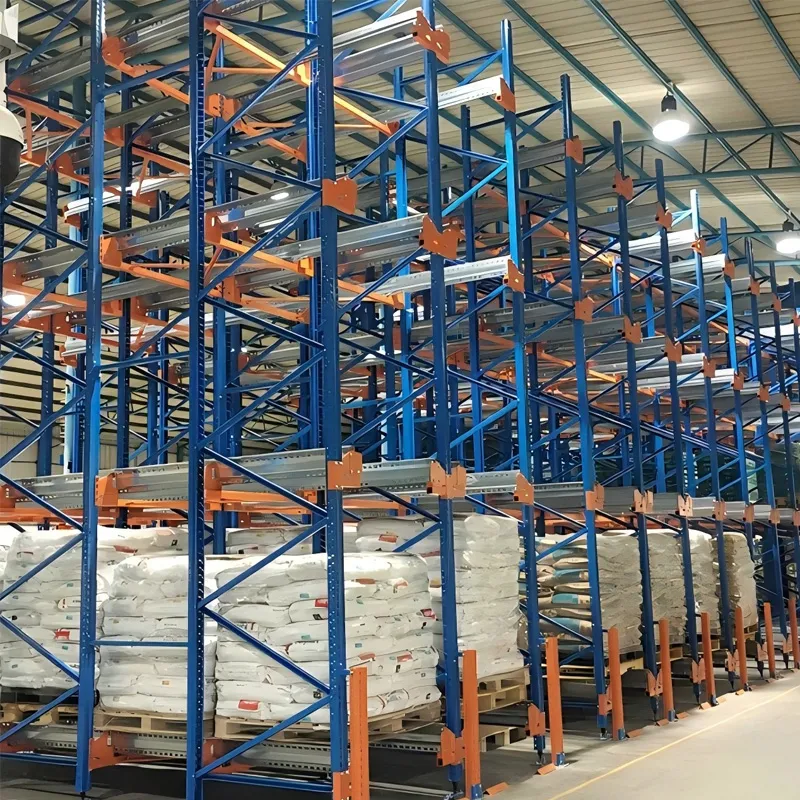
When they talk abouthigh-altitude storage on standard racks, many people immediately think about the numbers from SNiP or GOST. This, of course, is the basis, but in reality everything depends not so much on paper, but on understanding the physics of the cargo, the behavior of the metal and, most importantly, the human factor in the warehouse. A common mistake is to take the maximum height according to the rack passport as working, without taking into account the type of loader, the frequency of access, or even temperature fluctuations in the hangar. I went through this myself.
Norms are not just a table. This is a complex. Let's take, for example, SP 56.13330.2011 or the good old SNiP 2.11.06-91. There are general instructions on safety, distances, loads. But the key is the calculation of sustainability. And this is where the fun begins. A calculation made for an ideal concrete floor with a deviation of a couple of millimeters is faced with reality: the floor sank by 15 mm, the anchor did not fit perfectly, and the loader operator is working the third shift. The norm becomes a starting point, from which you then build, adding a coefficient “just in case?”. And this coefficient is not paranoid reinsurance, but often the result of incidents that are not written about in reports.
I remember a project where the customer demanded to squeeze out the maximum in height - to the eyeballs, right up to the roof. According to the passport, the racks are 12 meters, we met the standards. But they forgot to clarify in detail about the type of goods stored. It turned out that these were light but voluminous boxes that created a huge windage. When the gates were open in winter, a serious lateral load arose, which was simply not taken into account in the standard calculations. We had to urgently make changes to the project and add connections. It's good that we noticed it at the installation stage.
Hence the conclusion: the norm is the skeleton. You build up the meat for it yourself, based on a thousand little things: from the quality of the welds on the crossbars to the discipline of the warehouse staff. Sometimes it is more useful to spend time training storekeepers than recalculating a beam from 90 to 95 mm.
Here I would like to make a digression about manufacturers. A high-quality rack is not just rolled metal. This is an engineering product. For example, we spent a long time looking for a reliable partner for complex projects and eventually settled on productsHarbin Jusheng production of metal structures. Why? Not because they are the cheapest. But because in their approach one can see that same “practicality”. They don't just sell shelving, they can send an engineer who will first look at the floor and the customer's forklifts, and only then talk about height. Their websitewww.jshj.ruis, in fact, a technical library, and not just a catalogue. The company, founded in 2019 in Harbin, with a full cycle from design to service, has proven itself as a specialized enterprise, and not a reseller.
But even with good equipment, punctures happen. We had a case with the installation of high-rise racks for storing auto parts. The racks are excellent, everything was installed clearly. But they overlooked the client: in an effort to save money, he bought used reach trucks with an already worn-out mast. Their rated lift height was 10 meters, but in fact, due to backlashes, dangerous vibration had already begun at 9 meters. I had to urgently “cut back” design storage height. The equipment standards were met, but in fact they were not. Now we always require fresh test reports for loading equipment.
Another point is the protection systems. The most advanced standards now talk about protective nets and fences. But in pursuit ofhigh-altitude storagethey are often forgotten, considered superfluous. But in vain. Even a small box falling from a 10-meter height is an emergency. After one incident (fortunately, without casualties), we began to include protection by default in the estimate. The client can refuse, but signs a separate act releasing us from liability.
The design stage is 80% of success. Here it is important not only to calculate the load, but also to simulate the workflow. Where will the picking areas be? What is the route for the reach truck? Where is the bottleneck? Often designers, especially those who are far from warehouses, draw ideal rows. And then it turns out that 20 centimeters are not enough to turn the cart with the long length, and these centimeters are “bitten off?” from height due to the tilting of the masts.
Working with manufacturers such as the mentioned Harbin plant, I appreciate their approach to design. They offer not just beams and racks, but entire systems - be itracks for four-way shuttlesor classic beam ones. For high-altitude storage, this is critical because the system must be complete. You cannot take a heavy-duty beam from one and put it on a rack from another - the threads will not match, and the load will be distributed differently.
One of the most painful lessons was related to temperature deformations. We designed and installed a high-rise warehouse in an unheated hangar. In summer everything is perfect. The first frosts arrived at -25°C, and we heard a terrible grinding sound - metal was “playing”. This was not critical for strength, but it put psychological pressure on the workers. I had to explain and take additional measurements. Now we always create large temperature gaps for unheated rooms, even if the standard does not directly require this.
You can have the perfect design and high-quality shelving fromLLC ?Harbin Jusheng?, but ruin everything during editing. The most important stage is preparing the floor. Often it is not given attention. A difference of 1 cm over 10 meters of row length is already a problem. We now always do a topographical survey of the floor with a laser level before starting work. And if we see jambs, we either require leveling, or we correct the project by adding compensation plates under the racks.
Acceptance is not just “installed, you can work?”. We carry it out in three stages. First, a visual inspection and geometry check. Then - test load, often not up to 100%, but up to 110-115% of the nominal, but for a short time. And most importantly, a usability test. We send an experienced operator on a reach truck to check all the cells. His subjective feeling is “shaking?” or ?doesn't hit? sometimes more valuable than a dozen measurements.
It is at the reception that little things that are not taken into account in the standards often come up. For example, what color should safety fences be so that they are better visible in a dim warehouse? Or how often should height marks be placed on the posts? This is no longer a matter of GOST, but of common sense and experience.
The most important and most ignored stage. Normshigh-altitude storage on racks— this is not a one-time admission, but an ongoing process. The metal gets tired, the fasteners may become loose, and the floor continues to sag. Mandatory annual inspections are a must have. But few people conduct them for real, and not for show.
We have implemented a simple checklist for our clients for monthly self-monitoring: checking the tightness of anchors, inspecting for dents from impacts, monitoring the condition of the floor covering. It takes half a day, but prevents disasters. Problems often start with a small thing: the loader hit and bent the protective bumper. It seems nonsense. But this bumper no longer fulfills its function, and the next blow will be on the supporting pillar.
Another aspect is the change in logistics. The norms were calculated for certain goods and flows, but a year later the business changed and they began to store something else, heavier or with a different center of gravity. You need to have the courage to say: “Stop, let's count it?”. Sometimes this means not increasing, but, on the contrary, reducing the storage height or reducing the spacing of the shelves. True professional responsibility manifests itself here, in operation, and not on paper at the time of delivery of the facility.
As a result, returning to the keyword “norms”. This is a living organism. This is a dialogue between iron, concrete, people and cargo. There are no absolute truths. There is experience, attentiveness and unwillingness to skimp on safety. And when you see how, at a height of 12 meters, the shuttle moves smoothly and confidently along the racks that you designed and for which you are responsible, you understand that all these standards, calculations and sleepless nights were worth it. The main thing is not to forget that behind all these numbers there are real people below.