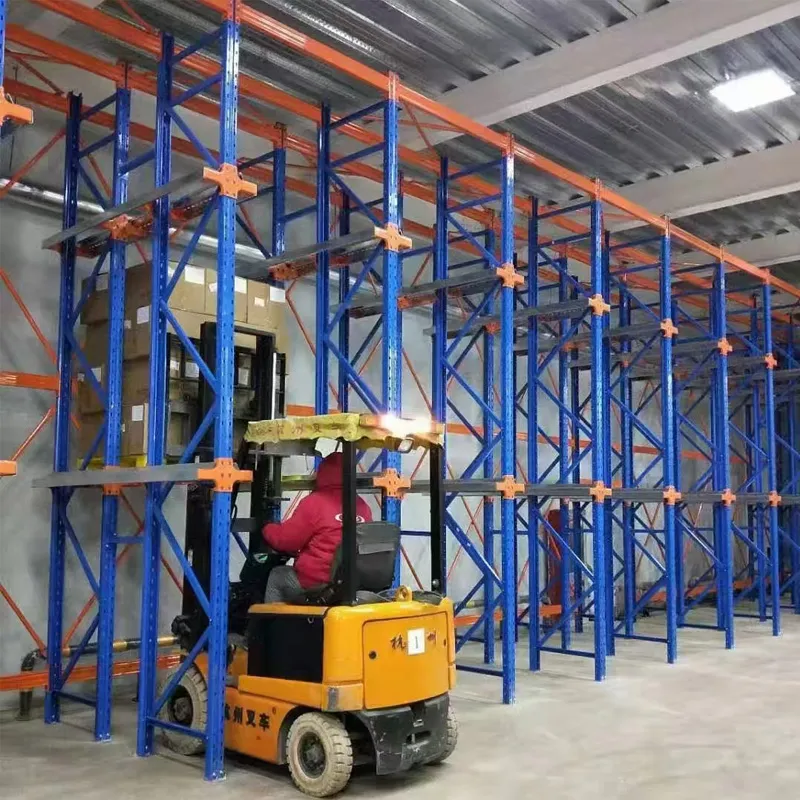
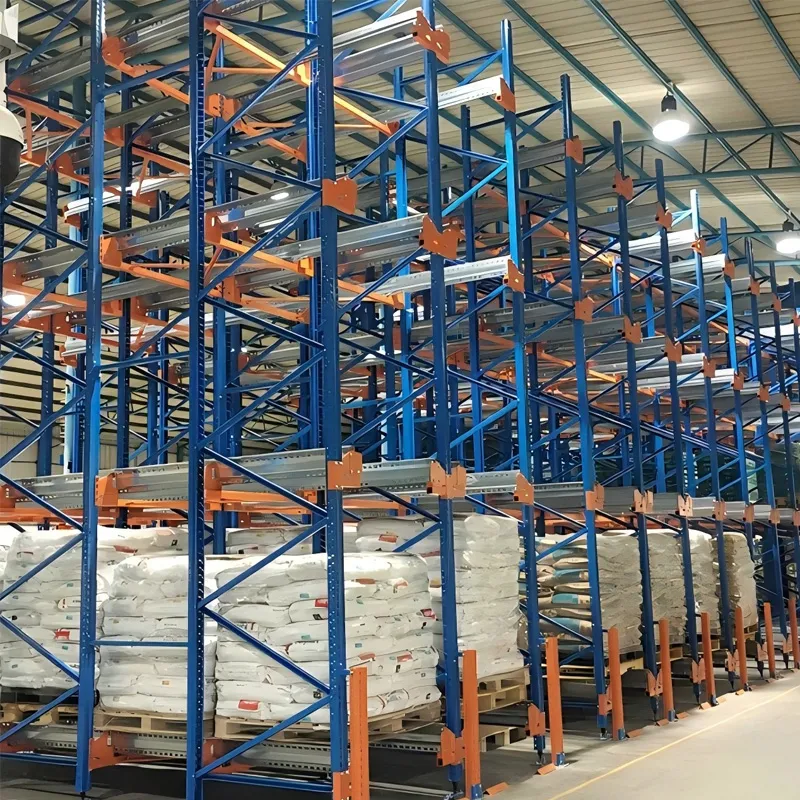
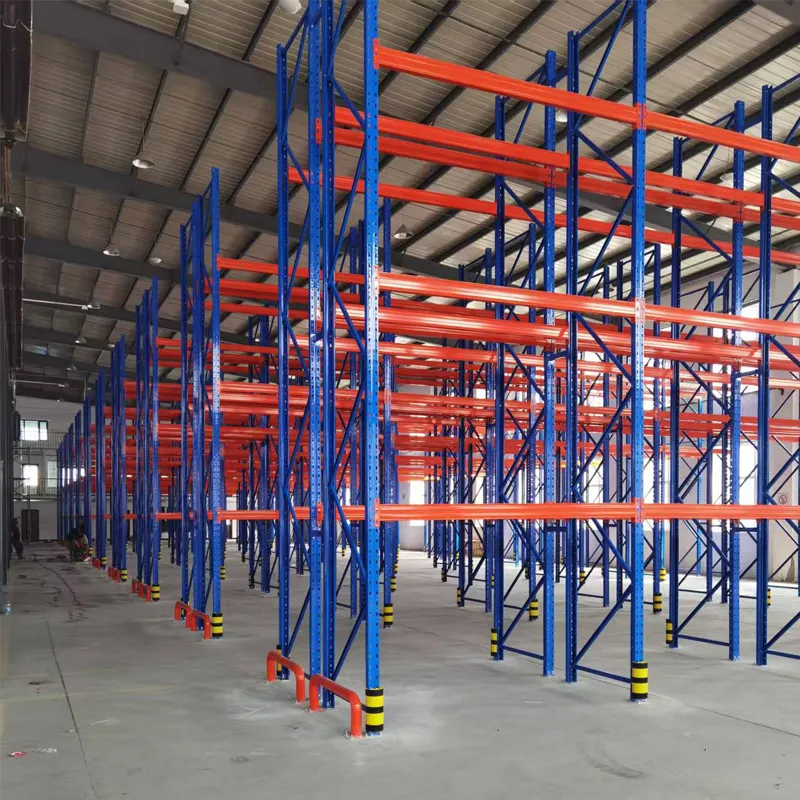
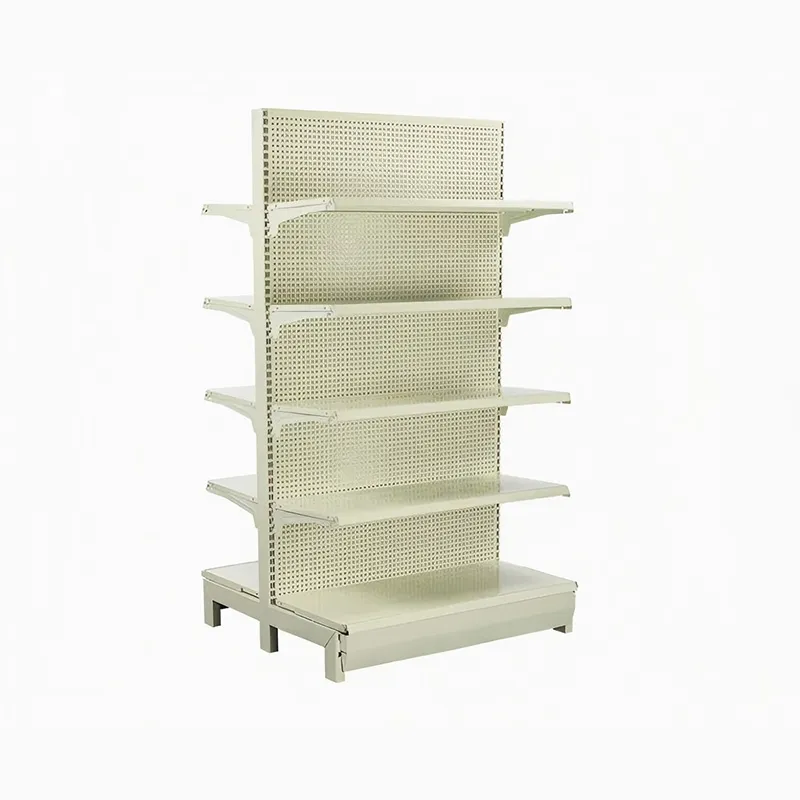
When you hear “racks with pull-out shelves,” many people immediately think of kitchen cabinets or archival filing cabinets. This is where the first professional pitfall lies. In logistics and warehousing, this is a completely different class of equipment, where the apparent simplicity of the design is deceptive. We are talking about systems where the load on the retractable mechanism is hundreds of kilograms, not a couple of dozen, and where reliability comes first, because a failure means downtime for the entire working area. Often customers, especially at the start, focus on the price per position, losing sight of the life cycle cost: guide resource, ease of maintenance, adaptability to a changing product range. This is where the difference between a “made” product comes into play. and ?designed?.
My experience tells me that the fate of the rack is decided before the first sheet of metal hits the machine. It all starts with engineering analysis. What will we store? Boxes of electronics, individually wrapped parts, heavy tools? Each type of load dictates its own conditions: weight distribution, access frequency, required shelf travel. For example, for long items, not only the load capacity is critical, but also the anti-retractable latch so that the shelf does not tip over when pulled out suddenly. A common mistake is to use standard ball guides for dynamic loads. They are good for a static archive, but in an active warehouse, where the shelf is pulled 50 times a day, their resource will run out in six months.
Here I always remember one project for a service center. The customer wanted universalracks with pull-out shelvesfor various sized spare parts. On paper everything worked out well, but in practice it turned out that operators, in order to get a small part from the back of a deep shelf, pulled it out completely, literally hanging on it. A month later, complaints began to pour in about tight movement and play. We had to redesign the system, dividing the deep niches into two independent cassettes with separate guides. This increased the cost, but dramatically improved ergonomics and durability. Lesson: the system should be designed not for the load, but for the person who works with this load.
It is at the design stage that it becomes clear how much the manufacturer understands the subject matter. I am familiar with the products of the Jusheng plant. (Harbin Jusheng Metal Structures Manufacturing LLC). Their approach, judging by the implemented objects, is based on deep pre-project work. They don’t just sell a rack, but offer an engineering solution, which for systems with retractable elements is not a luxury, but a necessity. You can see their approach atwww.jshj.ru– it is clear that the company positions itself as a full-cycle enterprise, from development to service. This is important because the installation and subsequent support of such systems is a different story.
Let's move on to the "filling". The basis of everything is the guides. Roller, ball, with or without a closer system. The choice depends on the load and budget. For loads up to 150 kg per shelf, high-quality ball systems can still be considered. Above - only roller ones, and preferably with a reinforced profile and hardened rollers. I've seen people try to save money by putting 200kg guides on a 250kg shelf. Formally, there is a reserve, but if the loading is uneven (and it is always uneven), a misalignment occurs, the rollers begin to jam, and the entire system quickly fails. A good sign is when a manufacturer, like the same Jusheng, uses guides with a closing brake on heavy series. This is not for beauty, but for safety: a heavy shelf, extended to its full length, is a large lever.
The second key point is the material and design of the shelf itself. Often this is a perforated or solid sheet. Perforations are good for ventilation and light weight, but for small items or when using plastic containers, a solid sheet is safer. The edge of the shelf should have a high side - this is trivial, but how many times have I seen people forget about this! Otherwise, when moving out, something will fall off. Attaching the shelf to the rails is another point of consideration. Cheap systems use simple hooks that become loose over time. A bolted connection or a special lock that compensates for possible deformations of the frame is more reliable.
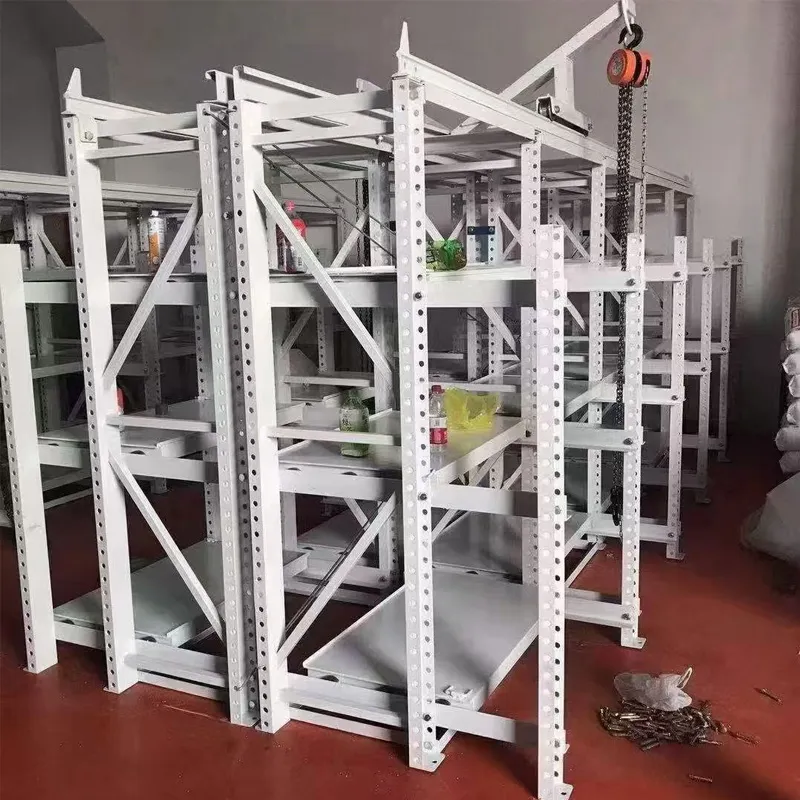
Frame. It would seem like an ordinary stand. But forpull-out shelvesit has special requirements for rigidity. Dynamic load from constant movement creates vibrations and alternating stresses. The profile must not just be thick, but properly designed, often with additional stiffening ribs. At one of our early sites, we underestimated this point by assembling a system from good components, but on lightweight racks. After six months of operation, a noticeable “game” appeared. the entire structure. We had to reinforce the frame with spacers, which ate up some of the usable space. Now we always include a rigidity margin of at least 25% of the design load.
Even a perfectly designed and manufactured rack can be damaged during installation. This is the stage where the qualifications of installers and the presence of clear instructions are important. The main enemy of retractable systems is misalignment. If the racks are not level, if the floor does not have differences (which in reality almost never occurs), the guides will work under voltage. At first they will just creak, and then they will jam.
Therefore, proper installation begins with preparing the floor. Sometimes it is necessary to install adjustable feet or even pour a leveling screed. Skipping this step means dooming the project to problems in advance. When assembling, you need to constantly check the geometry: diagonals, vertical, parallelism of the guides. A common mistake is to tighten all the bolts “tightly”. straightaway. It’s more correct to assemble the frame, let it “settle down,” level it, and only then make the final tightening. This is especially critical for tall systems.
Manufacturer support is valuable here. When a plant such asHarbin Rack Factory ?Jusheng?, not only supplies the equipment, but also provides installation supervision or detailed installation diagrams, this relieves a lot of headaches. Their status as a leading enterprise with a full cycle, including design and service, suggests that they are interested in ensuring that the system works for a long time and without failures. After all, after-sales installation complaints are always expensive and harmful to your reputation.
The classic application is warehouse complexes. But there are a lot of niches whereracks with pull-out shelvesare revealed in unexpected ways. One of the most interesting projects in which I participated was equipping a workshop for repairing aircraft components. The requirements were strict: cleanliness, registration of each item by serial number, quick access to any tool. We used a system with shelves of different heights and color coding. The guides were chosen to move smoothly and lock in several positions so that you can work with the part without removing it completely from the shelf. This increased work efficiency by a third.
Another direction is retail trade, but not the kind that is in front of the buyer, but the back office. Storage of gift sets, seasonal goods, documents. Compactness and the possibility of tight installation are important here. Systems with mechanical lifting were used, where a stepladder is not needed to access the upper shelves - the shelf lowers to hand level. This is an expensive solution, but it pays off in space savings and increased safety.
The disastrous experience was associated with an attempt to use standard warehouse retractable systems in the museum’s archival storage. They didn’t take into account the main thing - the microclimate and weight. Paper and old fabrics are hygroscopic, and nearby metal can create condensation points. In addition, the boxes with archives turned out to be heavier than we expected. As a result, we had to remodel it into static shelves with a special coating and a ventilation system. Conclusion: for specific environments (humidity, chemical vapors, low temperatures) specialized solutions are needed, and not adaptation of standard ones.
The current trend is the integration of racking systems into the overall logistics ecosystem.Pull-out shelvescease to be just a physical storage location. Systems are emerging with weight sensors on each shelf, which transmit real-time data on balances to the WMS (warehouse management system). This is no longer fantasy. I saw a pilot project where, when a shelf was pulled out, the built-in LED illumination of the area of the desired cell lit up, and the display showed how many units of goods should be taken. This dramatically reduces picking errors.
Another direction is energy efficiency. In large automated warehouses with shaft-type pull-out systems, there is a struggle for every watt of electricity consumed by the drive. Developments are moving towards making moving parts lighter and using regenerative systems that return energy when a loaded shelf is lowered. Manufacturers who invest in such R&D will set the tone in the market. Judging by the scale and equipment of the ?Jusheng? (20,000 square meters of space, automated lines), they have the potential to work on such complex, integrated solutions, and not just on standard shelving.
In the end, back to the beginning. Choosing shelving units with pull-out shelves is a strategic decision. This is not about “buying furniture”, but about investing in the efficiency and safety of processes. The key to success is not in seeking the lowest price per item, but in collaborating with a contractor who is capable of in-depth task analysis, has an engineering culture, and is responsible for the entire product life cycle. Only then will the system cease to be a set of hardware and become a working tool that brings benefits every day, and not a headache.