When they say 'high-rise shelving', many people simply imagine higher shelving, a shelf to the ceiling. But this is only a superficial glance, behind which lies a whole complex of engineering solutions, calculations and, importantly, practical compromises. The term itself already suggests height, but at what point does 'altitude' begin? There is no single standard in the industry, but from experience, when it comes to systems above 10-12 meters, everything changes - the requirements for the foundation, materials, installation accuracy and, of course, for design. Here you can no longer simply take a standard project and scale it. I once saw how at a site they tried to save money on calculating loads for a 15-meter system, citing the fact that “the racks are the same, only longer.” The result is deformation, risk of collapse and expensive dismantling. It is a classic mistake to underestimate the effect of height on overall structural rigidity and dynamic loads from forklifts.
Design is the basis. But even an ideal calculation in a program faces the realities of production and installation. Let's take vertical racks for example. Forhigh-rise racksNot only the grade of steel is critically important, but also the quality of the rolled product and the absence of internal stresses. The heterogeneity of the material at a height of 15 meters can manifest itself in the most unpleasant way. We once worked with a metal that was ideal according to the data sheet, but after we put it into production we noticed a slight, fraction of a percent, difference in the thickness of the pipe wall in different batches. For ordinary racks this would have gone unnoticed, but here they had to be re-sorted and allocated to less critical units. A manufacturing plant that understands these nuances is half the battle. By the way, if we talk about manufacturers, thenHarbin Jiusheng Metal Structure Manufacturing Co.,Ltd(their website ishttps://www.jshj.ru) just one of those who are focused on the full cycle. Their site is 20,000 sq. m in Harbin allows you to control the process from raw materials to the finished structure, which is a big advantage for high-rise systems. When production, development and testing are in one bundle, it is easier to track such 'little things'.
Another point is connections. Bolted or rivet? It would seem a matter of taste. But at heights, where structures are subject to vibrations from operating equipment and even from the movement of loads, bolted connections require strict control of the tightening torque and, most importantly, regular inspection. Rivets, if we are talking about high-quality cold riveting, may be more reliable, but they complicate possible future dismantling or reconfiguration. Often the choice is dictated not by the engineer, but by the logistics of the future warehouse. If frequent redevelopments are planned, then bolts. If the system is static for decades, you can also consider rivets.
And of course, geometry. Installationhigh-rise racks- this is always alignment using a laser level. A distortion of a few millimeters at the base to the upper tier turns into centimeters. I once observed how installers, in order to speed up the process, neglected to perform an intermediate check after installing every third level. As a result, we had to disassemble the almost assembled 14-meter section - the upper beams simply did not fall into place. We lost two days. The conclusion is simple: for high-rise systems, the installation schedule must include mandatory control points after installation of every 4-5 meters in height.
The steel structure itself is only part of the system. Its heart is in material handling equipment. High-rise stackers, reach trucks, and sometimes stacker cranes. Here the main paradox arises: the rack is designed according to the characteristics of the equipment, and the equipment is selected according to the parameters of the rack. A vicious circle. A common mistake is ordering racks before choosing a forklift. As a result, either the equipment cannot use the entire height due to limitations on loading capacity on the upper tiers, or, conversely, the racks are not designed for dynamic loads from a more powerful model of a reach truck, which they later decided to purchase.
An important nuance is the width of the passages. For high-altitude systems with reach trucks, it is critical. Saving 10-15 centimeters on aisle width seems attractive until operation begins. Wear of the floor covering, the risk of hitting the racks, a decrease in the operator’s speed due to the need for constant increased concentration - all this reduces the savings to nothing. Recommended standards are not a whim, they are derived from practice. And yes, they depend on the model of equipment. The best practice is to have a technical passport of the forklift with the turning dimensions on hand at the stage of calculating the rack layout.
Operational control. Regular inspection is not a formality. You need to look beyond the obvious impact damage. On high-rise structures, you need to pay attention to the condition of the bolted connections in the nodes, to possible traces of corrosion (especially in unheated warehouses with changes in humidity), and to the verticality of the racks. A simple way is to hang plumb lines on key sections and record the deviations in a journal. If the deviation increases, this is a signal for a detailed examination.
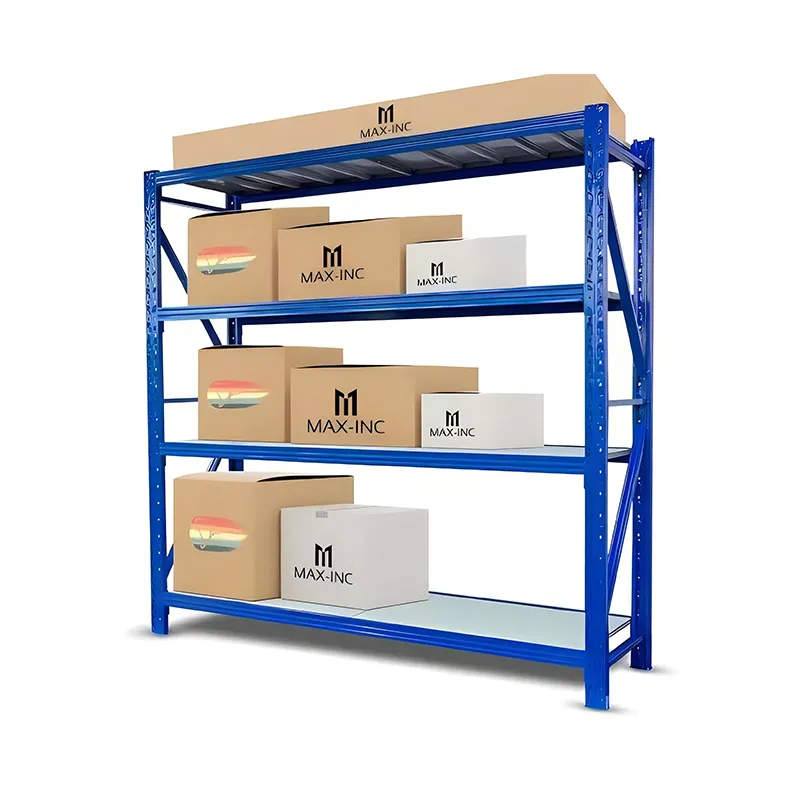
Not all types of shelving 'reach up' equally well. Classic shelfhigh-rise racks- the most common, but also the most demanding solution in terms of rigidity. Here the entire load falls on the frame. But, for example, beam (pallet) racks, with increasing height, require strengthening not only the racks, but also the beams themselves, since the leverage and bending load increases. Often you have to increase the cross-section of the beam or use special profiles, which, of course, affects the price and useful volume (the beam 'eats' space).
An interesting case is mezzanine shelving. They are often not considered 'high-rise' in their pure form, but when it comes to multi-level mezzanines with a height of 8-10 meters, the problems are the same: calculation of loads on the lower tier, vibration resistance, safety of fences and stairs. An additional factor here is the comfort and safety of people working on the tiers. Loads are no longer only static (weight of goods), but also live (movement of personnel).
A separate topic is racks for four-way shuttles. This is already aerobatics. The system is designed for a specific type of shuttle, with micron tolerances for parallelism of the guides. The height here is limited primarily by the capabilities of the shuttle itself and its power supply system. But if everything is calculated correctly, this gives a colossal storage density. Companies that claim a full cycle, like the sameHarbin Jusheng LLC, usually have separate engineering teams for such high-tech projects, because here the design of racks is inseparable from the design of the logistics system as a whole.
Many people miss this point until they encounter it. A warehouse in Krasnodar and a warehouse in Norilsk are two different stories forhigh-rise racks. Temperature changes affect the metal. Not so much on its strength, but on its geometric dimensions. The coefficient of linear expansion is a small value, but with a span length of 50-60 meters and a difference of 50 degrees between summer and winter, the expansion can reach several centimeters. This needs to be included in the project - expansion joints and expansion gaps must be made. Otherwise, in the summer, the structure may “butt” against the walls of the warehouse, creating critical stresses.
For northern regions with large snow cover, it is important to calculate the load on the roof if the racks are part of the building frame (the so-called rack warehouses). And here the height plays a cruel joke - the windage increases. Wind load becomes a determining factor when calculating anchorage to the foundation. There were precedents when designers, accustomed to working with the central zone of Russia, underestimated the wind load for open areas in coastal regions.
Humidity. For unheated warehouses in regions with high humidity, the issue of anti-corrosion protection comes to the fore. Galvanization must be of high quality, with sufficient layer thickness. Powder painting is a good addition, but not a panacea if there are aggressive impurities in the air (for example, near chemical production). Sometimes it makes more sense to immediately include in the estimate racks made of steel with a high content of alloying elements, although this is more expensive.
The main engine of the transition tohigh-rise racks- saving space. But these savings are not free. The design itself is more expensive due to higher metal consumption and more complex production. Specialized lifting equipment is more expensive. More expensive installation (high-altitude workers and more complex equipment are required). More expensive service. Therefore, the calculation of payback must be very detailed.
People often forget to include the cost of strengthening the floor. The load per square meter during high-altitude storage can be many times higher. An old concrete floor may not hold up. You have to do a screed or even a complete reconstruction of the base, which can be compared in cost to the cost of the racks themselves. This is the same “pitfall” that pops up during the installation process and ruins all budgets.
Another hidden item is energy consumption. High-altitude reach trucks consume more energy than conventional forklifts. Plus, if the warehouse is high, but not automated, more powerful and uniform lighting of all tiers is required, which also increases electricity bills. Sometimes these operating expenses “eat up” all the benefits from savings on renting space in 2-3 years. Conclusion: you need to consider not the cost of racks per ton, but the total cost of owning the system over its entire life cycle.
Working with high-altitude systems is a constant search for balance. A balance between strength and cost, between storage density and access speed, between an ideal project and a realistic budget. This is not an area where you can blindly follow a catalog or choose a supplier based on price alone. Experience, understanding of technology and, what is rarely said out loud, responsibility are important here. Because an error in calculation or saving on material in the case of a 15-meter structure is no longer just a defect, it is a safety issue. Therefore, when you see a manufacturer who, likeHarbin Jusheng, focuses on the full cycle and its own large-scale production, this inspires a certain confidence. They don’t just bend metal, they must understand how their structure will behave under load at height. And this understanding is born only in conjunction with the design department, production workers and installers. Everything else is just high shelves.