When they say 'plastic pallet', many people think of just a blue or gray thing for boxes. And therein lies the main mistake. In fact, this is a complex technical product, the choice of which determines the efficiency of the entire logistics chain in the warehouse. I have been working with warehouse equipment for many years, and have seen how incorrect pallet selection has negated the benefits of even the most advanced racking systems. This is especially true for automated warehouses, where the slightest deflection or non-standard size can paralyze work. This is what I want to talk about, without gloss, with examples from practice.
I remember one of our first projects with a high shelving system. The customer insisted on the cheapestplastic pallets, citing its lightness and resistance to moisture. We, then still green, agreed. The result was sad: under a constant load of 800 kg (and this is the standard for many pallet racks), the pallets began to sag noticeably after just six months. Not critical, but enough for the forklift to start catching them when driving onto the shelf. This created a constant risk of falling loads and wore out the racks themselves. We had to urgently change the entire batch to reinforced models, which turned out to be exorbitantly expensive. Conclusion: cheap plastic for intensive use is an illusion of savings.
Another nuance that is often forgotten is the temperature regime. There was an incident at a pharmaceutical warehouse where part of the building was not heated. In winter the temperature dropped to -25°C. Standard polypropylene pallets became as fragile as glass. One day, while unloading, a corner simply broke off. We had to study the issue deeper and look for frost-resistant composites, which, naturally, hit the project budget. Now I always ask about the operating temperature range.
And, of course, geometry. It would seem that the standard is EUR or FIN. But each manufacturer has its own molds, and tolerances can vary. We once purchased a batch of pallets from a new supplier, seemingly to standard. And when they started installing racks for four-way shuttles fromHarbin Jiusheng Metal Structure Manufacturing Co.,Ltd, it turned out that the step between the lower bars is a couple of millimeters smaller. The shuttle simply could not start the pitchforks correctly. A trifle, but it stopped the launch of an entire high-tech site. Now we always test a 'bundle': a specific pallet on a specific rack or in a specific automated system.
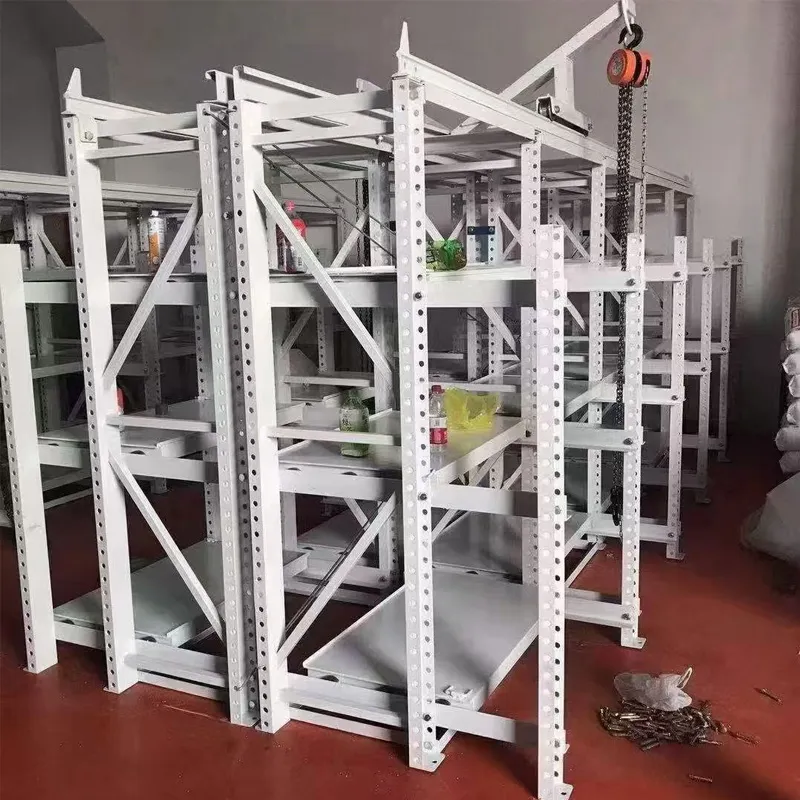
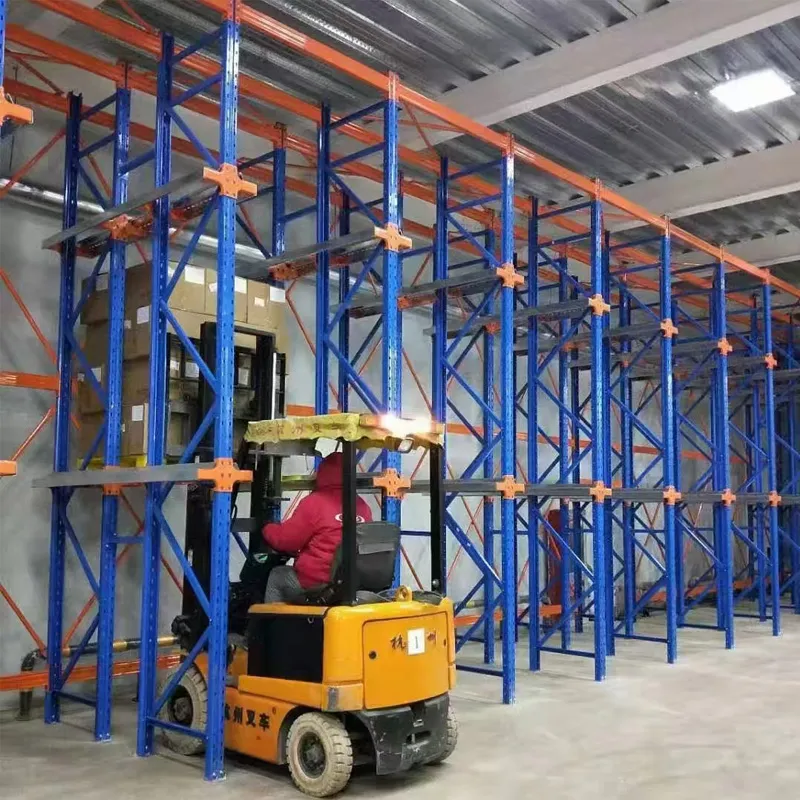
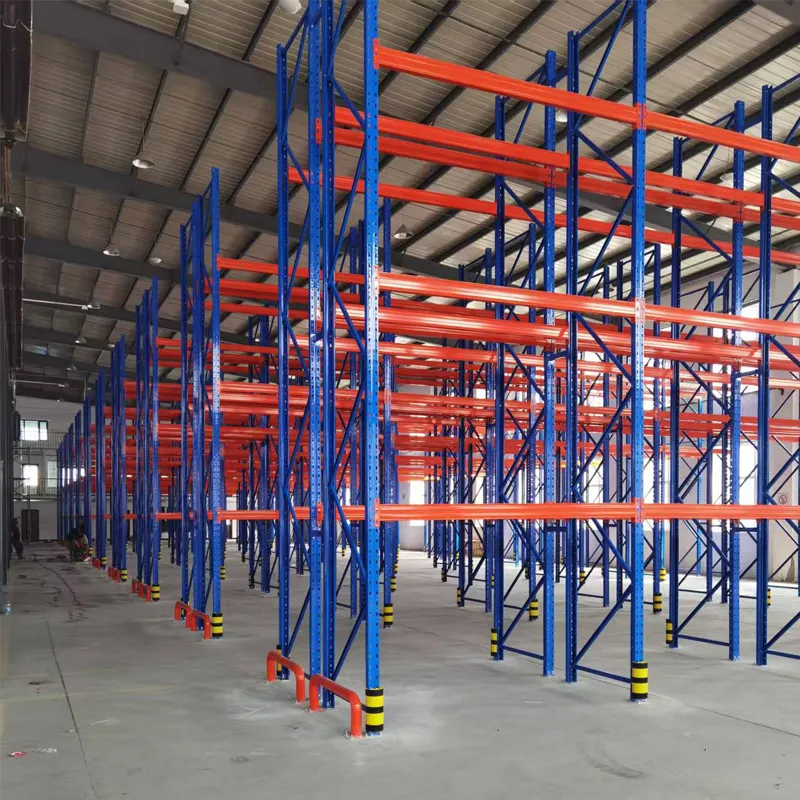
Working with such serious manufacturers as the Harbin Jusheng plant (their website, by the way,www.jshj.ru), you understand how interconnected everything is. Their beam or deep racks are designed for specific parameters: pallet size, its rigidity, weight distribution. Just taking “some” plastic pallet means risking not only the cargo, but also the integrity of the expensive metal structure. The manufacturer, of course, gives technical requirements, but life always makes adjustments.
For example, for mezzanine systems, not only the load is critical, but also the total height of the pallet with the load. A plastic pallet is often lower than a wooden one, which allows you to gain a few centimeters in the height of the tier - and in a multi-bay warehouse this means tons of additionally stored goods. But what is important here is that the edges of the tray are reinforced enough to withstand the pressure from the legs of the tray above. A regular ribbed design may not be suitable; special support points are needed.
But for drive-in racks, plastic is a controversial choice. On the one hand, it is not afraid of moisture and rotting. On the other hand, the coefficient of friction for plastic and metal beams is different than for wood and metal. This may affect stacking safety and may even require adjustments to the angle of the beams. We have not used such solutions, but theoretically this is possible with special coatings or notches on the bottom of the pallet.
Now there are hundreds of models on the market: single-deck, double-deck, with different pitches of ribs, made from primary or secondary raw materials, with antistatic properties, for the food industry... It’s dizzying. My principle: start from the bottleneck in the system. If this is an automatic warehouse, the main thing is rigidity and dimensional accuracy. If there is a food warehouse, there are certificates and the possibility of easy sanitization. If orders are manually sorted, the low weight of the pallet is important.
Pallets with removable or insertable wooden tops are very helpful. This is a hybrid option that combines the rigidity and maintainability of wood with the durability and hygiene of a plastic base. But the price is appropriate.
When choosing a supplier, I always look not at a beautiful catalog, but ask for samples for testing. I give them the maximum load, leave them in the cold, throw them from a meter height. Once I even tried to set it on fire (to test for flame spread, of course, under controlled conditions). This is the only way to understand what stands behind the words 'high-strength polyethylene'. Large shelving manufacturers, such as the aforementioned Jiusheng, often have proven partners in related products, and their recommendations are worth taking into account - they also do not want problems with their shelving due to a low-quality pallet.
Yes, the initial investment in a goodplastic pallet2-3 times higher than a wooden Euro pallet. This stops many people. But consider further. A wooden pallet in intensive use lasts 1-2 years, then it needs to be repaired or disposed of. Plastic - easily 8-10 years. It does not dry out, does not crack due to changes in humidity, and does not need to be disinfected during international transportation. This is ideal for a closed cycle in your warehouse.
But there is also a downside. A new plastic pallet is much more tempting to lose or have stolen than an old wooden one. Accounting and control must be up to standard. Some of our clients embed RFID tags or unique engraving into the pallets, which again is an additional cost.
And one more thing about recycling. Recycling a broken plastic pallet is not a trivial task. Not every city has such facilities. But just throwing it away is both expensive and not environmentally friendly. This is a future headache that also needs to be factored into the total cost of ownership.
The trend is obvious: automation and robotization of warehouses. And for robotic palletizers and automatic stackersplastic pallet- a more predictable 'partner' than a tree. It is uniform in density, its weight is constant, and its geometry is stable. I think there will soon be 'smart' pallets with sensors built right into the material to monitor the condition of the cargo. But this is still expensive and redundant for most.
On the other hand, pressure from the green agenda is growing. Plastic manufacturers are actively working on biodegradable composites and full recycling technologies. Perhaps in a couple of years we will see pallets made from recycled ocean plastic labeled carbon-neutral. This will be a strong marketing move for large retailers.
What I can say for sure, looking at the projects that we implement using racking equipment from market leaders: the plastic pallet has ceased to be a consumable material. It has become part of the warehouse infrastructure, as important as the racks themselves. And it must be selected with the same care with which Jusheng engineers design load-bearing beams for a high-rise warehouse. Not as a product, but as a technical solution for a specific task. Only then everything works like a clock, without surprises and emergency stops. And in our work this is the main indicator of quality.