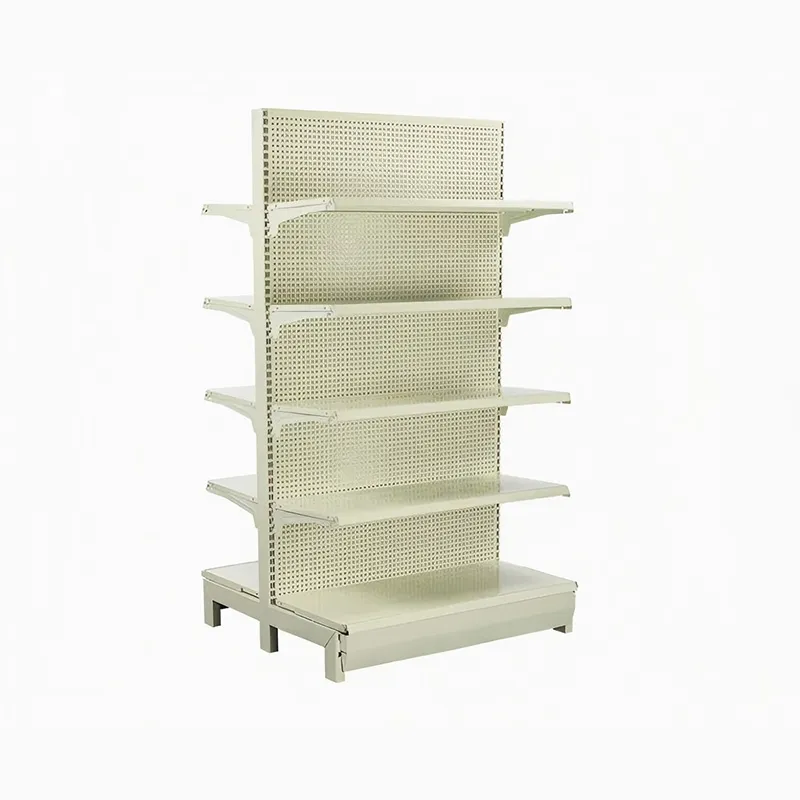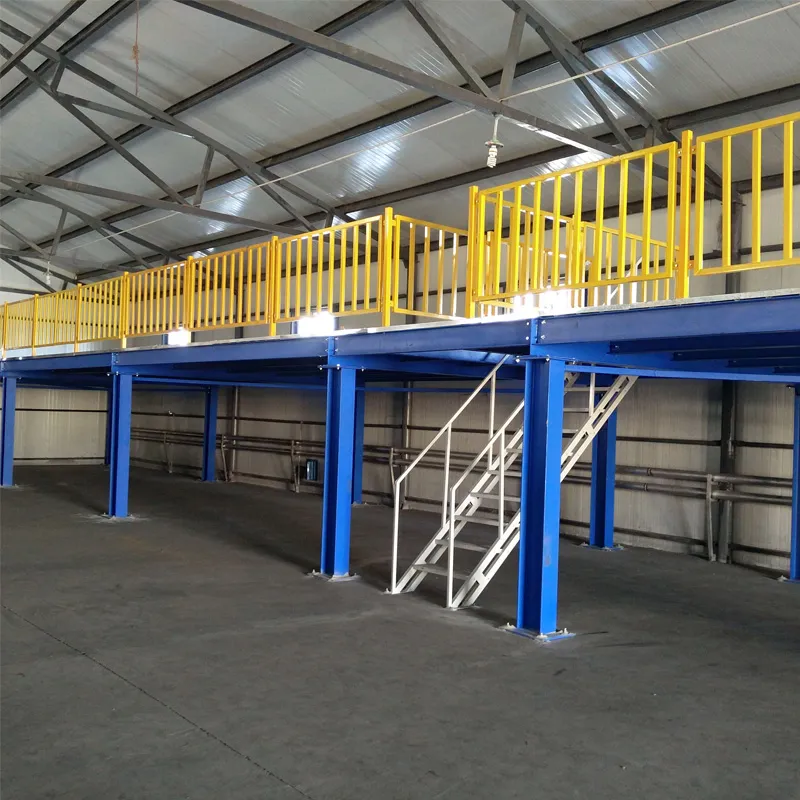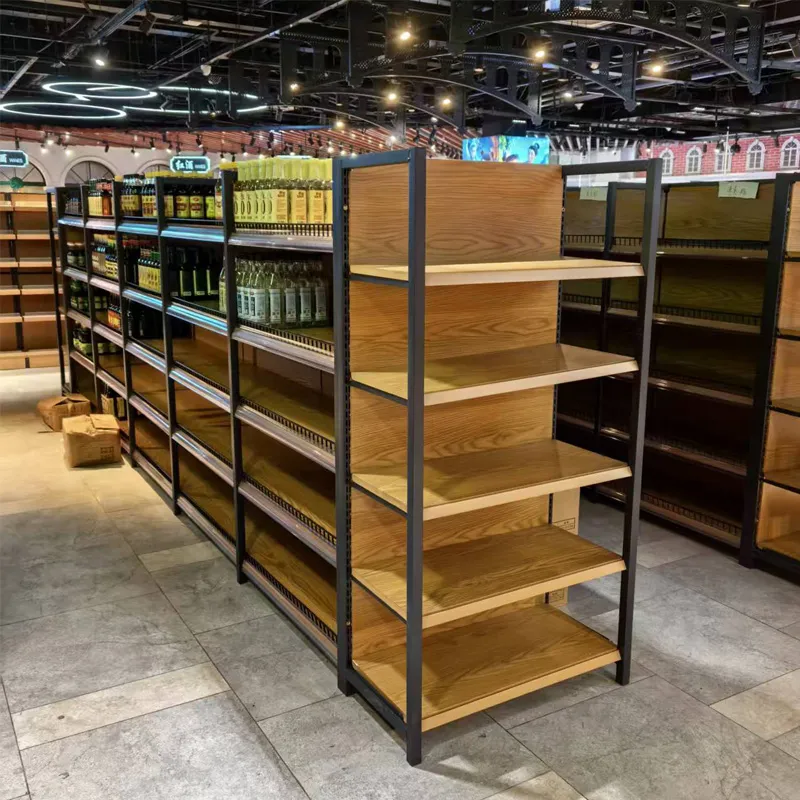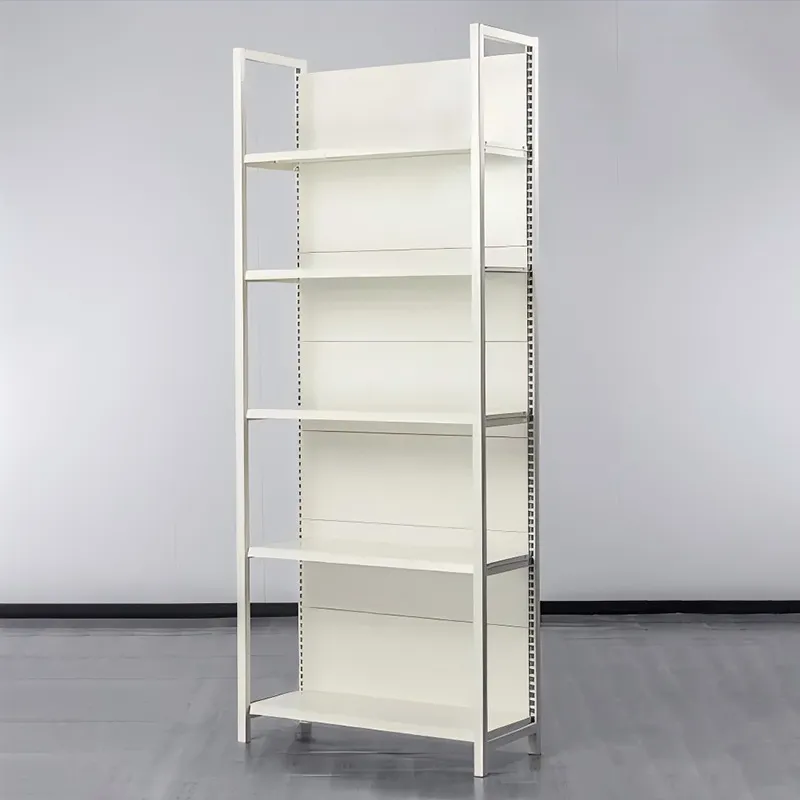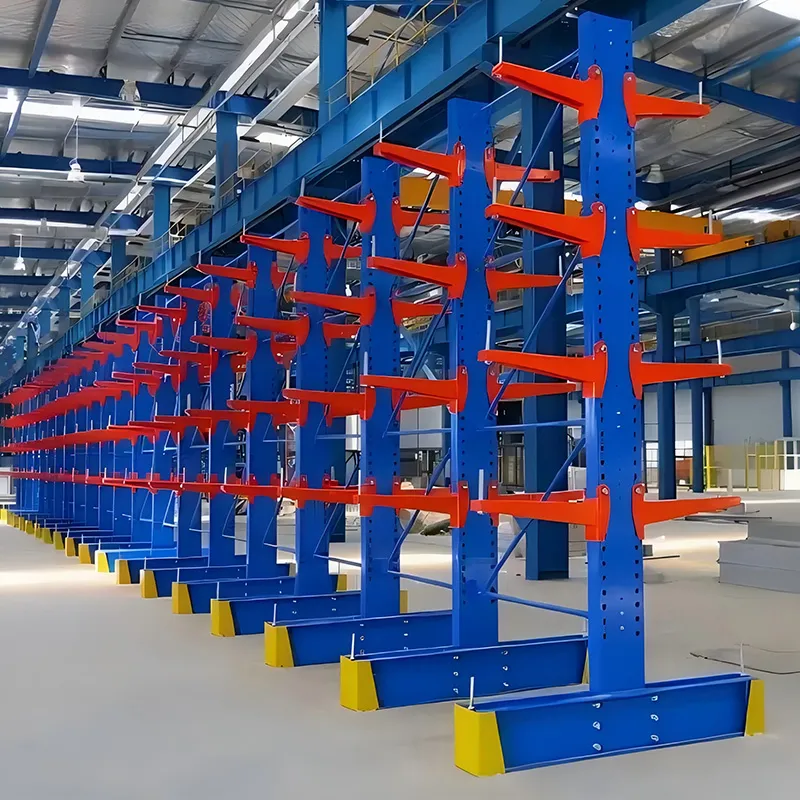
I’ll tell you right away: many people still believe that cantilever racks are just beams sticking out of columns. And they even think about retractable shelves as something attached and secondary. A deep mistake. In fact, this is a whole system where the shelf is not just a shelf, but a key working element. And when it comes to long, but not very heavy loads that need to be frequently inspected or selectively selected, the combination of a console and a retractable mechanism is often the only adequate solution. But not every mechanism will survive.
I will not take abstract examples. We had a project for one of the logistics centers near Khabarovsk. The fittings were stored in plastic packaging, moldings of different calibers. Classic pallet racks were not suitable - access is only from the end, and the length of the racks is 6 meters. Bet on regular consoles without extension? Then the operator needed a side-shift forklift or a reach truck, which was not possible in a narrow aisle. And manually pull out the pack from the middle... you understand.
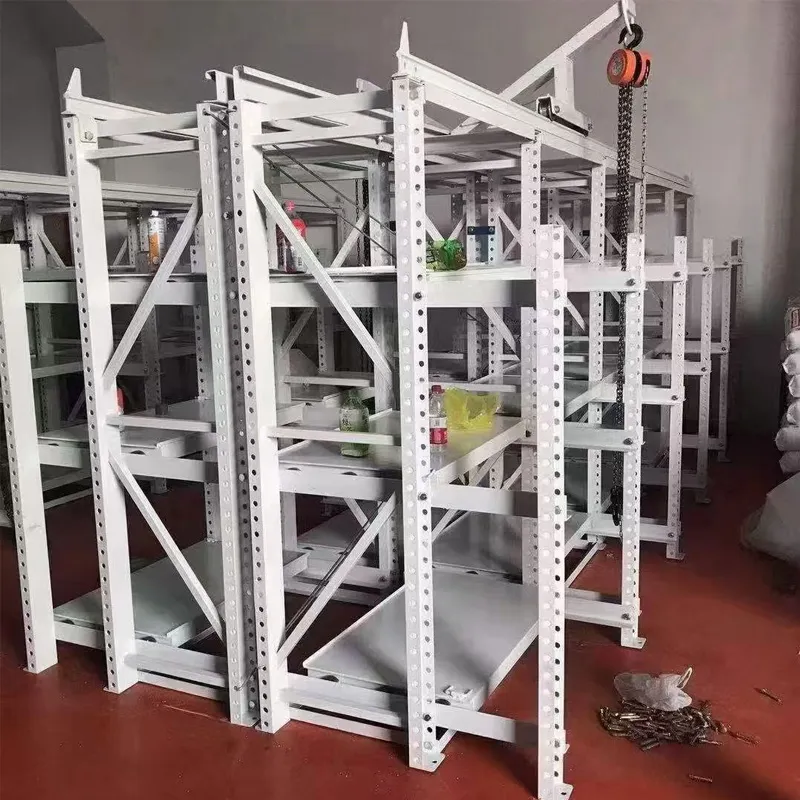
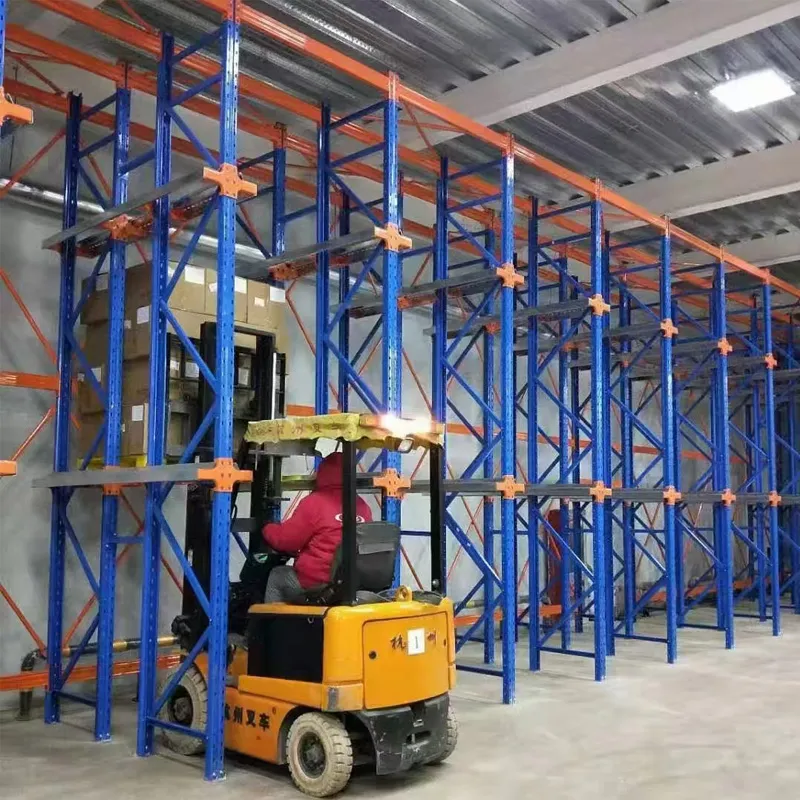
This is where the idea came frompull-out shelves. But not those for documents in the office. We are talking about designs with a load of 200 kg per shelf, with roller or ball guides with full extension. At first the customer doubted: “Won’t it break?” Won't it warp??. Fair. We were working closely with engineers back then.?Harbin Jusheng Metal Structure Manufacturing Co.,Ltd.. Their design approach is not to simply weld guides to a cantilever beam, but to design the entire assembly (column, console, bracket, shelf) as a single load-bearing system, taking into account the dynamic loads when extending under weight.
The result? The racks have been standing for three years now. Using hand trucks or stackers, operators can easily pull out the desired section, pick up part of the load, and push it back. The main advantage that was noted on the spot was that the time for searching and selecting a specific standard size was sharply reduced. This is practical value, not a picture in a catalogue.
Now about the sad stuff. Previously, we tried to equip racks with ready-made retractable systems from third-party suppliers. It would seem logical: a specialized hardware manufacturer should do this better. On paper, everything matched: both the load and the stroke. In practice, it's disappointing. The main problem is backlash and “biting”. under maximum load.
Why? Because the shelf manufacturer calculated the static and vertical load. And in a cantilever system, when the shelf is extended a meter with a load of 300 kg, a serious overturning moment occurs. The guides experience not only vertical, but also lateral loads. Standard telescopic guides, even reinforced ones, began to “walk” after a few months and a distortion appeared. The client complained that the shelf needed to be “lifted” in order to slide it in - this is absolutely unacceptable.
After a series of such failures, it became clear: the retractable mechanism must be designed and selected specifically for the cantilever loading scheme. That is why we are now looking towards manufacturers who take on the entire cycle, from design to manufacturing of all components. Like, for example, at the same factory?Jusheng?— in their workshop I saw how assembled units were tested on a special stand that simulated extension under load with a slight distortion, as happens in reality. It's more expensive, but it works.
The thickness of the shelf metal is not everything. You often pay attention to the quality of the welds in the fastening points of the guides and the protective coating. In friction areas (inside the guides), the powder paint wears off quickly. Some manufacturers andjshj.ruSome of the things to look out for here include the use of galvanized or chrome-plated rollers and ball runners, while the guides themselves are made of galvanized steel. This is a small thing, but it determines the service life without creaking or jamming.
Another nuance is the system of stoppers and clamps. The shelf must be securely fixed in the closed position so that it does not spontaneously move out due to vibration. But at the same time, the latch should be easily released by the operator. I have seen solutions with a simple spring latch and with more complex flag mechanisms. For medium loads (up to 150 kg) the spring is enough. For heavy ones, you need a lever mechanism that distributes the force. On the websitehttps://www.jshj.ruIn the section of console systems, you will notice that they offer different options for fastening shelves, which indicates a detailed design.
And yes, I forgot to mention the shape of the shelf itself. It shouldn't be flat. A small edge around the perimeter is required, especially along the front, so that the load does not move when pulled out. Or perforation for ventilation, if required by the nature of the stored material.
When implementing such systems, you cannot think only about the rack. It is necessary to consider the entire chain of movement. What equipment will serve? Reach truck, stacker, man with a cart? The choice of shelf height and, critically, the type of retractable mechanism depend on this.
For manual access, systems with smooth operation and light force to start movement are suitable. If the shelf will be pulled out by a forklift, then the mechanism must be designed to withstand the impact load at the moment of “picking up”. Often in such cases they use not telescopic, but roller guides on more massive brackets.
When designing a warehouse for storing long plastic profiles, we were faced with the fact that the client wanted to make maximum use of the height of the room - 11 meters. The standard solution is multi-tiered consoles. But how to ensure access to shelves at a height of 8 meters? The retractable design becomes more complicated here. As a result, together with engineers, we came up with an option with electrically driven sliding carriages that lower the desired shelf to the operator’s level. This is already aerobatics and expensive, but for specific tasks it is the only way out. I saw that onHarbin shelving plant ?Jusheng?The portfolio also contains similar complex projects, which indicates serious engineering potential.
Yes, a cantilever rack with high-quality pull-out shelves will cost 1.5-2 times more than a regular console rack. And many customers refuse at this stage, choosing “simpler”. But here we need to consider not the cost of a meter of shelving, but the cost of storing and selecting a unit of goods.
In the same example with the logistics center, the implementation of the system made it possible to increase storage density by 15% (due to more precise zoning for different lengths) and reduce order selection time by 30%. The payback was less than two years only due to savings on labor and equipment. This is a strong argument.
Therefore, when talking with a client, I now always shift the emphasis from the price of equipment to the overall efficiency of the warehouse. And I show you the calculations. It often helps. The main thing is to be confident in the reliability of the supplier. When you know that a factory, like the same Jusheng, founded in 2019 and having a full cycle from development to service, provides a guarantee and is responsible for calculations, offering such a solution to the client is much calmer.
So, to summarize.Console racks with pull-out shelves- not a panacea and not a basic option. This is a specialized tool for specific tasks: storing long, medium-weight cargo with high turnover or the need for frequent selective access. The key to success is not in the idea itself, but in the details of execution: in the correct calculation of mechanics, the quality of components and integration into the work process.
Now there are many offers on the market, but I would advise looking towards manufacturers who design and manufacture key components themselves, and do not just assemble a construction set from someone else’s components. Because in this system everything is interconnected: column, console, shelf, mechanism. And the weak link will ruin everything.
Personal experience, sometimes bitter, suggests that the stingy pays twice, especially in warehouse logistics. It’s better to invest once in a well-thought-out, reliable system that will work for years without surprises, than to constantly patch and repair something that was originally designed only for a beautiful rendering in a catalog.