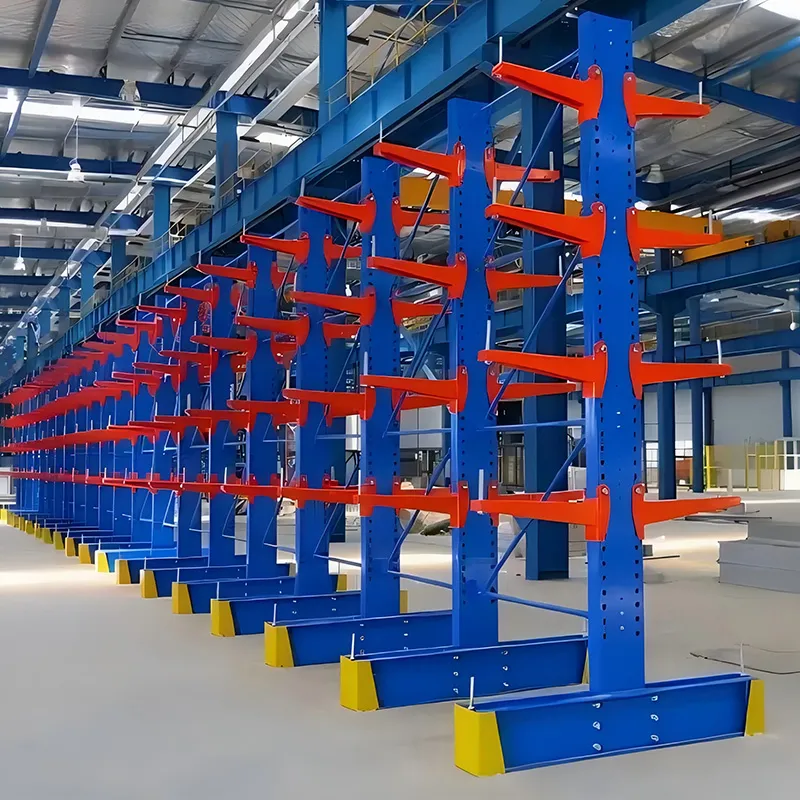
When they talk aboutcantilever racks, the first thing that comes to mind for most customers is pipes, lumber, rolled metal. Yes, this is their classic niche, but I would not narrow the scope so much. A common mistake is to assume that this is a highly specialized solution. In practice, if you approach the design correctly, they can effectively store a lot of other items: long plastic profiles, rolled materials, even some types of finished products in the textile or furniture industry. The main thing is to understand the physics of the load and not try to cram in something that cannot be squeezed in.
The most painful point in working with console systems is not the racks themselves, but the preparation of the object. How many times have I encountered a situation where a client orders a project, we calculate everything, and then it turns out that the floor in his room is not designed for the planned distributed load, especially when it comes to high-rise systems. Or columns that ?suddenly? find themselves right on the console installation line. That's why we are now in ?Harbin Jusheng LLC? We always insist on a preliminary technical audit, although this lengthens the process. It is better to spend time at the design stage than to clear up the consequences at the installation stage.
Structurally, many people imagine a console as just a beam mounted on a rack. But what is important here is the nuance of the angle of inclination of the console and the method of its attachment. A rigid welded joint is one thing, but using adjustable brackets or hinge joints to compensate for possible deflection is another. We tried several schemes in production before settling on a combined solution with reinforced locks for basic models and individual calculation of welded units for loads above a certain tonnage. This is not a tribute to fashion, but the result of several incidents with deformation, when they tried to unify everything with one brush.
By the way, about the material. Not everyone understands the difference between hot-rolled and cold-rolled profiles for cantilever beams. For long spans under heavy loads, cold-rolled steel, for all its apparent aesthetics, may not be suitable due to its different bending behavior. We are in ?Jusheng? We use both types, but we always justify the choice in the specification, otherwise we then have complaints: “Why is my neighbor’s cheaper?” But because your neighbor may have a profile that will begin to “float” in a year or two.
We had a project for one of the warehouses in Khabarovsk. The customer wanted to storecantilever racksLarge format aluminum sheets packed on pallets. It would seem like a classic. We calculated everything using standard formulas and included a good safety margin. But they didn’t take into account one human factor - the forklift. Drivers, in order to speed up unloading, often do not carefully place the pallet on the console, but “drive in?” it, creating a shock dynamic load. Six months later we received photos with deformed fastenings of the first levels.
I had to quickly go out and conduct an analysis. The solution turned out to be not in strengthening the racks themselves (they already had plenty), but in organizing the workplace. We designed and supplied additional wear-resistant steel guide rails that were mounted on the floor in front of the rack. They took the brunt of the impact when the forks moved in, and then the operator carefully pushed the pallet. Sometimes the problem is solved not by replacing equipment, but by improving the logistics around it. We now always take this experience into account when designing loading and unloading areas.
Another point that is often overlooked is anti-corrosion treatment. For unheated warehouses or areas with high humidity, standard powder coating may not be enough. For the same Far Eastern client, we eventually redesigned part of the structures using hot-dip galvanizing technology for racks and consoles. Yes, it's more expensive, but in this case, the savings on coverage resulted in potentially much higher replacement costs down the line.
Installationcantilever racks- this is a separate song. It would seem that you assembled the vertical racks, hung the consoles - and you were done. But this is where maximum precision is required. If the racks are skewed even by a couple of degrees, the load will be distributed unevenly across the consoles. I once saw how installers tried to level the structure after hanging all the beams and partially loading it - it was hellish work. Therefore, our standard now is the mandatory use of a laser level at the stage of installation and fixation of stands, and nothing else.
The question often arises about the pitch of consoles. It can be made fixed or adjustable. There is no universal answer. For a warehouse with a constant item of the same length, a fixed step is more profitable - the structure is more rigid and reliable. But if the assortment changes frequently, then, of course, adjustable brackets provide flexibility. We are at the ?Jusheng factory? We produce both options, but we always try to find out from the client the dynamics of his warehouse operations before offering a solution. Otherwise, he will then have to buy additional sets of consoles or, worse, dismantle and re-drill the racks.
And yes, about the installation tool. Not all bolts and nuts are created equal. Using the wrong wrench or torque can result in the connection being either undertightened (and causing looseness) or overtightened (threads will break or internal stress will occur in the metal). In our product data sheets we always indicate the recommended tightening torque, but, unfortunately, not all installation teams pay attention to this.
The market is saturated with offers and competition is fierce. When people come to me for advice on choosing a manufacturer, I always say: look not at a beautiful catalog, but at the production capacity and approach to engineering. For example, our plant LLC ?Harbin Jusheng? (https://www.jshj.ru). Yes, we were founded in 2019, but the territory is 20,000 sq. meters and several automated lines - this is not for show. This allows you to control the entire cycle: from cutting metal according to your drawings to painting and packaging. Forcantilever racksThe quality of the welds on the attachment points of the console to the rack is critically important. The automatic gas shielded welding that we use gives a much more stable and durable connection compared to manual welding in “garages”.
Many small manufacturers save on design by offering standard solutions. But a console system is often a piecemeal product. Before launching into production, our development department necessarily models the load in specialized software, especially for high-rise or non-standard configurations. There was a story where a client wanted to place shelving in a room with load-bearing trusses on the ceiling. We proposed not just a free-standing system, but partially tied it with the upper tier to these trusses, thereby relieving the load on the base. This required additional calculations and approvals, but in the end a more rational and safe solution was obtained.
After-sales is what separates a serious player from a reseller. You can sell the racks and forget about them. Or you can, as we try to do, keep in touch, take an interest in how the operation is going, offer solutions for expanding or modernizing the system. Metal construction is a long-term investment, and it should be treated accordingly.
Nowadays there is a lot of talk about “smart” warehouses. And in the context of console systems, I see potential not so much in robotization (although this is possible) as in load control sensors. Imagine that each console had a sensor that showed the current load and warned of overload or uneven distribution. For critical facilities with expensive materials, this could be insurance against human error. Technically this is feasible, the question is price and market readiness.
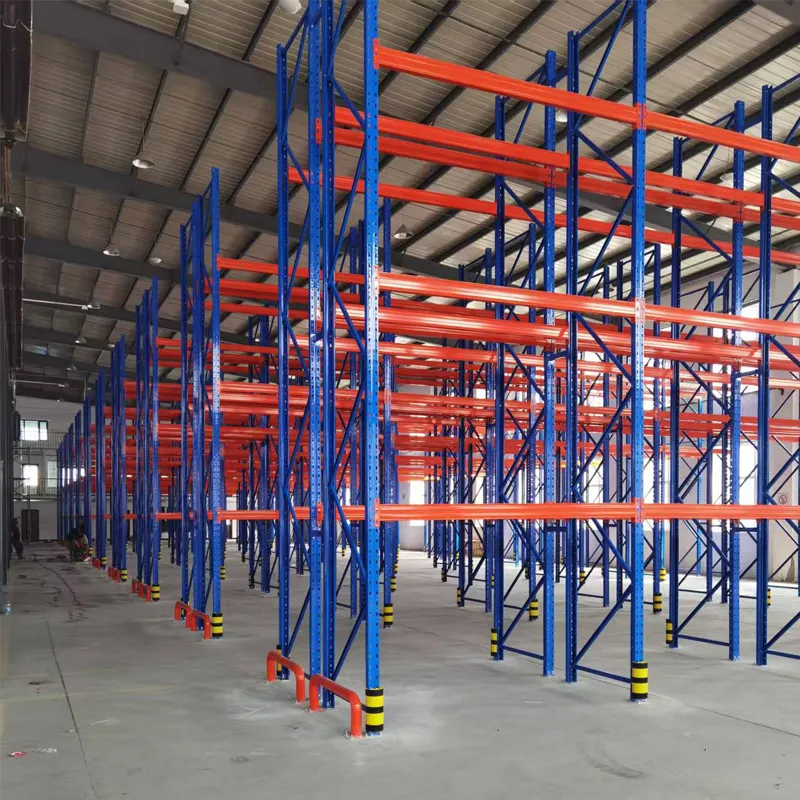
Another direction is combined systems. Often, long items, pallets, and small parts need to be stored on site. Integrationcantilever rackswith, for example, shelf or pallet systems into a single frame - an interesting engineering challenge. We have done hybrid projects where one part of the rack serves as a support for the consoles, and the other for the beams of the pallet rack. This saves space and increases overall structural rigidity.
In general, the topic is far from exhausted. A console rack is not just a piece of hardware with a shelf. This is calculation, experience, understanding of the customer’s processes and sometimes a compromise between the ideal project and the budget. The main thing is that this compromise should not concern security. And everything else is a matter of technology and agreements.