This element is often talked about last, but in vain. Many people think that since the racks are light, then fastening the beams is a secondary matter; almost any piece of hardware will do. In practice, it isbeam clampturns out to be the “weak link”, due to which the entire structure loses rigidity and the load loses stability. I have seen more than once how on sites when assembling these “little things” They didn’t pay attention, and then they wondered why the shelves were “playing”.
Structurally - yes, it is often a steel bracket or lock. But its task is not just to hold the beam on the rack. It must compensate for micro-displacements that occur during loading and unloading, dampen vibrations from forklifts and at the same time remain convenient for installation and, critically, for quickly adjusting the level in height. If the fastener is made of thin metal or has an incorrect hook angle, it will either bend or the beam will simply jump off the hook when loaded laterally. This happened on older designs where the retainer was essentially just a bent plate.
Nowadays, many manufacturers have switched to cast or stamped clamps with a latch tongue. This is better, but there is a nuance here: if the latch is too tight, assemblers simply bend it with a hammer so as not to fiddle with it, and it loses its function. If it’s too weak, it vibrates and pops out on its own. A balance is needed, which can only be achieved through testing and, pardon the tautology, practice.
By the way, about practice. At one of the facilities near Harbin, where we installed racks for storing packages of parts, the customer saved money and bought the cheapest components. The fasteners were flimsy and had poor paint job. After six months of operation in an unheated warehouse, many of them developed a red coating, the metal became brittle, and several beams even sank because the latch was bent. I had to change all the mounting points. The savings turned into serious expenses.
When you work with factories that produce the entire cycle themselves, you see the difference. Take, for example, the Harbin shelving plant ?Jusheng? (?Harbin Jusheng Metal Structure Manufacturing Co.,Ltd.). They have been on the market since 2019, and their territory is 20,000 sq. m. m is not just a number. This is an opportunity to control the process from a steel roll to the finished product.beam clamp. They do not purchase these elements externally, but stamp them themselves on their own automated equipment.
Why is this important? Because the thickness of the metal, the grade of steel and the quality of stamping are determined by a single technical process. Their lightweight shelving clamp comes from the same batch of steel as the stands and goes through the same zinc treatment. This gives uniform corrosion resistance. I saw their samples - the cut shows that the metal is dense, without cavities, and the edges of the stamping are smooth, without burrs that could damage the coating of the beam or injure the assembler.
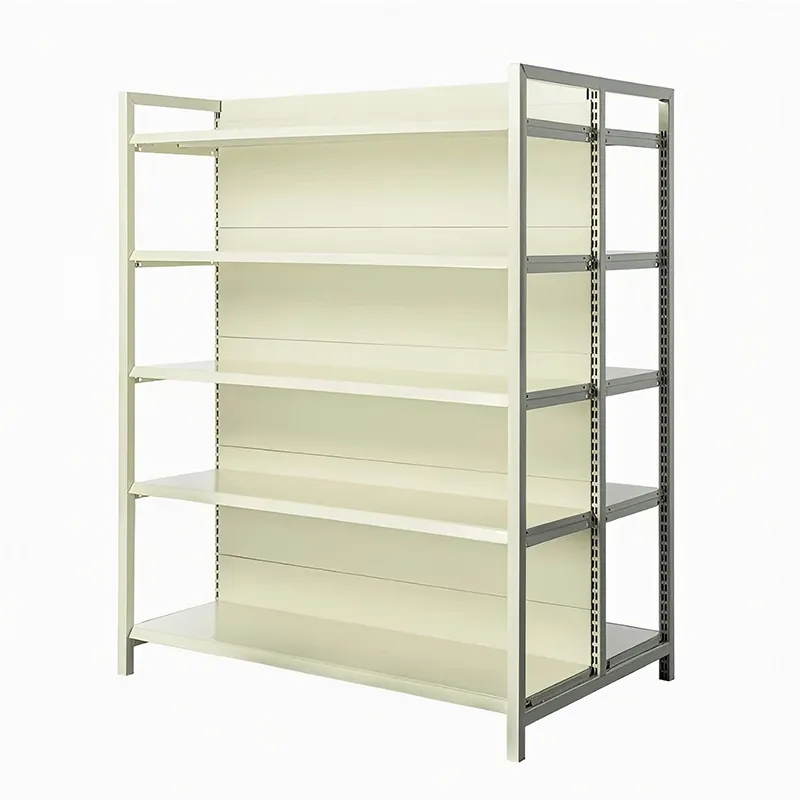
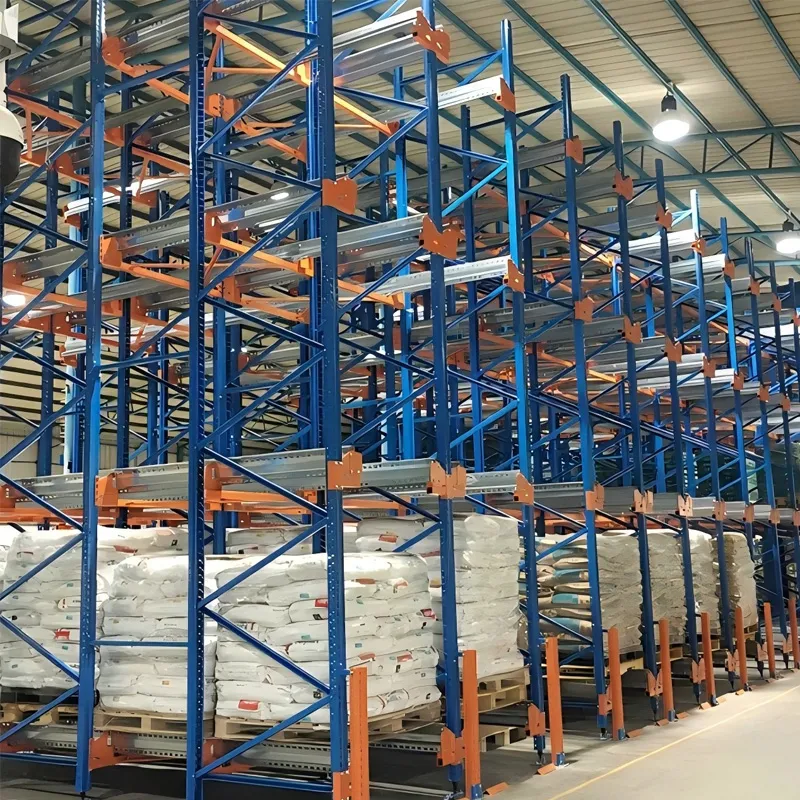
Their approach as a large specialized enterprise with a full cycle - from design to service - allows them to test fasteners as part of real systems: beams, shelves, mezzanines. They can afford to ?play? with the geometry of the hook to find the optimal angle at which the beam not only holds, but also presses even more tightly against the post under load, increasing the overall stability of the structure. This is not a theory, this can be seen from their technical albums of solutions - there are several options for clamps for different types of loads, even for light systems.
The first and main mistake is to consider all clamps to be the same. They take the first one that comes in size and think that the job is done. But if, for example, you take a lock from the “deep” beams and place them on a “shallow” surface, the contact will not be across the entire plane, the pressure point will shift, and the fastening will quickly become loose.
The second is ignoring the environment. For cold or damp warehouses, fasteners with a thicker protective layer are needed, otherwise corrosion will eat the metal at the point of greatest stress - at the bend. The same ?Jusheng? The range includes options with reinforced galvanizing specifically for such conditions, as is directly stated in the specifications, but who reads these sheets?
The third mistake is editing “by eye”. The latch must be installed exactly 90 degrees to the post, and the latch must fit clearly into the hole in the beam. Often, assemblers, especially during urgent work, do not check the angle; the latch is skewed. It seems to be holding. But under dynamic loading (say, a forklift hitting a rack), such a mount may not withstand the torsional load. I myself saw the consequences - boxes stacked in several tiers collapsed precisely because of such a seemingly minor distortion.
So why am I all this?Beam clamp— this is not a consumable, it is a full-fledged, calculated unit. It cannot be designed separately from the entire racking system. When a manufacturer, like Jusheng, makes the racks, the beams, and these same clamps, he has a complete picture of the loads and interactions. At the design stage, he can include a safety margin in the clamp, which will be in harmony with the load-bearing capacity of the beam.
For lightweight shelving, which is often perceived as a “temporary solution”, this approach is even more important. They are more often reassembled, the configuration is changed, which means that the latch experiences more “installation-removal” cycles. Its opening life must be high. And here it is precisely high-quality stamping and proper heat treatment of the metal that is important so that the latch tongue does not lose elasticity after a dozen rearrangements.
In general, my advice, based on bitter and sweet experience: pay attention to the fastener manufacturer. It is better if it is the same plant that makes the main structures. Ask not only about the thickness of the metal of the fastener, but also about the type of protection, about the recommended load on the fastening unit, about tests. As practice shows, it is precisely such “little things” determine whether the rack will last a year or a decade. And a company that deals with the full cycle, from development to service, is usually ready to justify such details and, importantly, guarantee them.