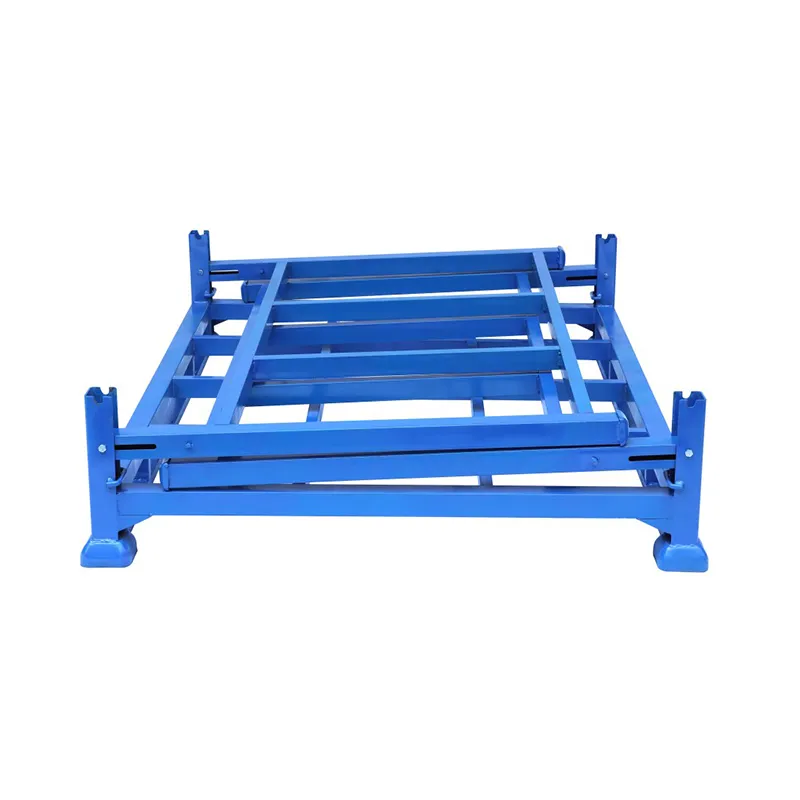
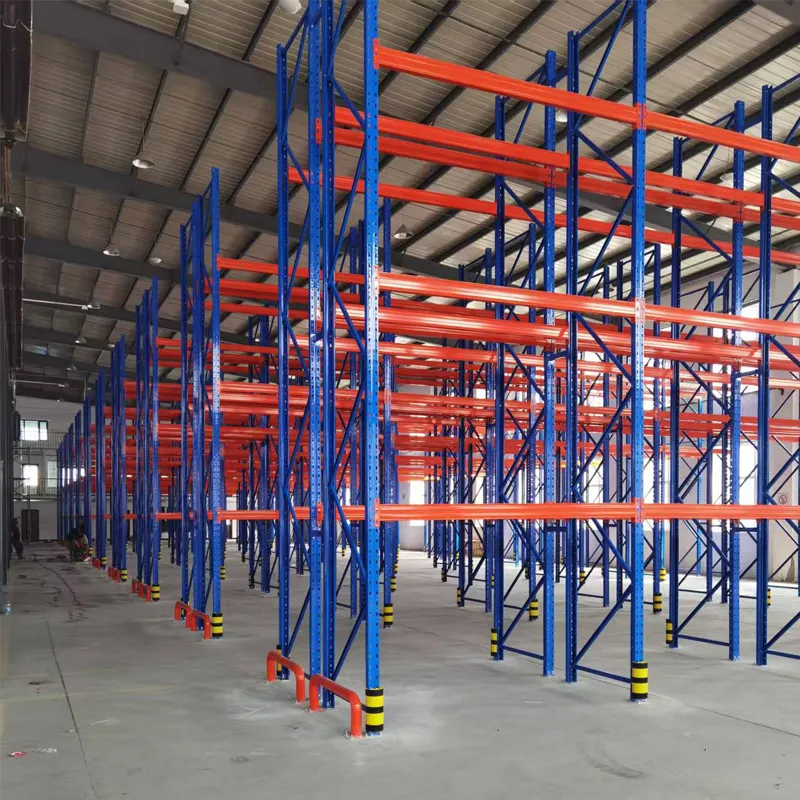
When you hear “deep shelving,” the first thing that comes to mind to the uninitiated is just shelving that is deep. In fact, this is an entire storage system with strict logic, and a mistake in design or installation can be costly. Many customers think that the main thing is to gain maximum space by stuffing the pallets as deep as possible. But they forget about access, the speed of cargo processing, and the specifics of stackers. I have seen more than once how, on objects assembled somehow, forklift drivers curse everything in the world, trying to get the required pallet from the depths of the sixth row. It’s these nuances that are not written in advertising brochures that I want to speculate on.
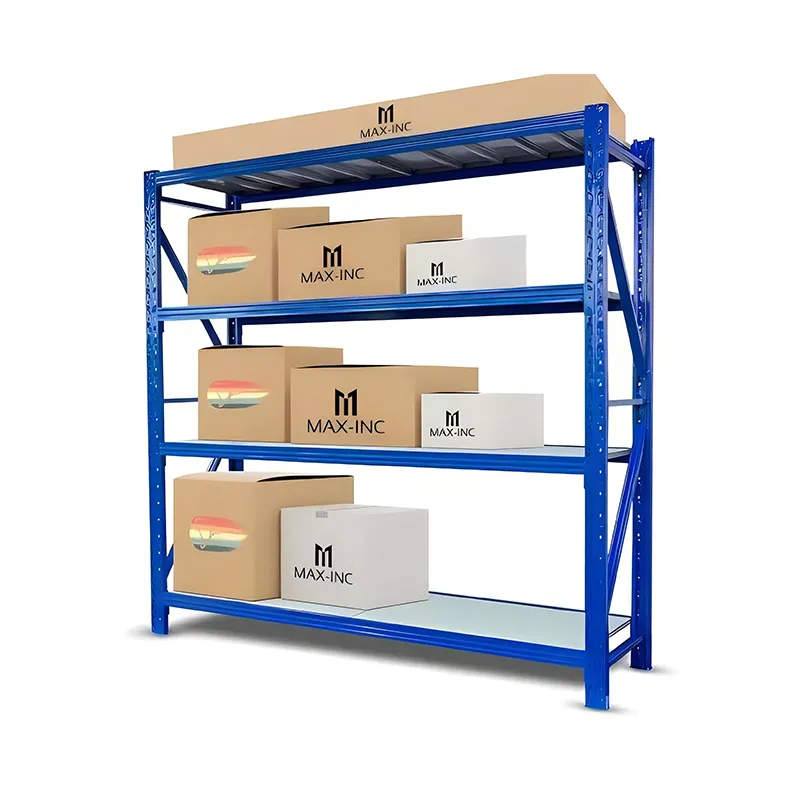
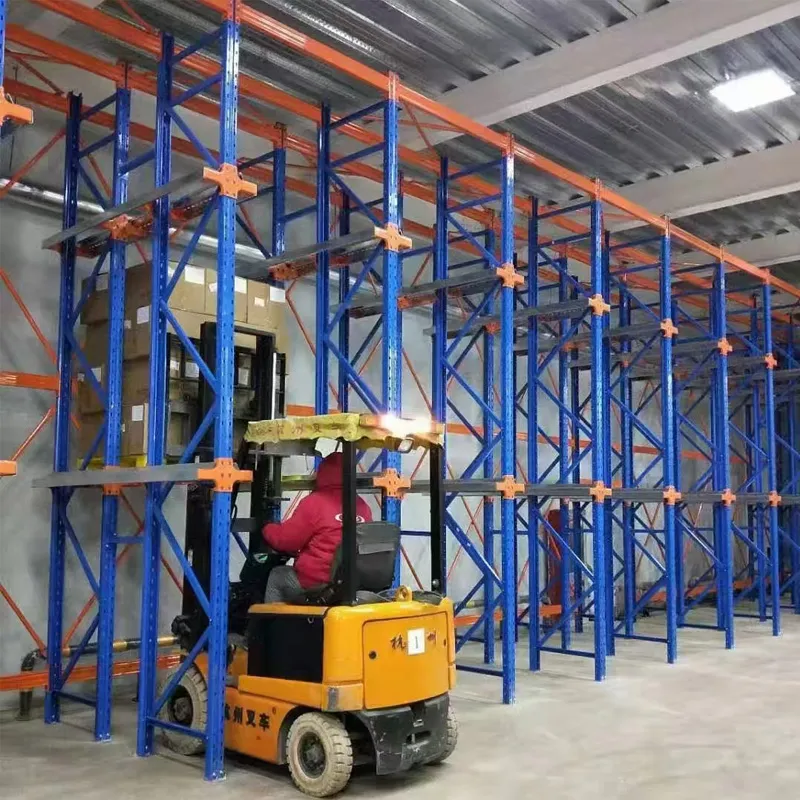
Essentiallydeep racksis a pallet storage system where cargo is placed in several rows deep on both sides of the driveway. The classics are drive-in or pallet-mounted systems. But here lies the first stumbling block: the choice between drive-in and drive-through. Drive-in is a dead end, entry and exit on one side. Seems to save space? Saves. But it creates a queue of forklifts if you need to get a pallet from the farthest row. This is a system for storing large quantities of homogeneous goods with a long shelf life. For more active trade turnover, it is often better to drive-through, where there is a through passage. But it also requires more room for maneuvers.
The key element here is the guides, the rails. They must be laid with perfect precision. The slightest misalignment, and the wheel of a stacker or reach truck begins to wobble, and there is a risk of damage to both the rack and the cargo. We once came for an audit to a warehouse where a client complained about frequent breakdowns of telescopic forks. It turned out that the installers saved on leveling the floor and compensated for this with pads for the guides. As a result, the load was distributed unevenly, and the geometry of the entire system floated. I had to redo almost everything.
And another point that is often overlooked is height.Deep shelvingOften they try to make them tall in order to use the cubic capacity. But here the question arises about the type of technology. A regular front-end loader is not suitable for high-altitude storage. Reach trucks or stackers with a retractable mast are needed. And this is another category of costs - both for equipment, and for requirements for the floor (evenness, load), and for driver qualifications. You can’t just draw a height of 12 meters in a project without making sure that the client understands all the consequences.
The most common mistake is incorrect calculation of loads, not only vertical, but also horizontal. When the stacker drives deep, it creates significant dynamic loads on the guides and on the connections between the posts. If the design is designed only for the static weight of the pallets, deformations appear over time. I saw racks where the upper tiers literally “floated”. relative to each other due to constant lateral forces. This is a direct path to an accident.
The second is ignoring the specifics of the product. It would seem, what's wrong with that? But if you store, for example, drinks in glass containers, pallets have strictly defined, often non-standard dimensions and weight. Or long ones. They require special solutions, perhaps reinforced beams or additional supports. Standard beam spacing may not be suitable. I once came across a project where standarddeep racksfor storing car tires in boxes. They didn’t take into account that the pallets were incomplete, the load was point, and the standard shelf sheets began to bend under the weight. I had to urgently change it to a solid flooring made of thick sheets.
And the third thing that sellers are silent about is the cost of service. A system with greater storage depth requires more complex logistics within the warehouse. You need a clear FIFO or LIFO system, you need competent warehouse software (WMS), otherwise there will be chaos. Without this, you don’t get a highly efficient warehouse, but a black hole where goods go and get lost. Savings on space turn into losses from slower turnover and selection errors.
A good example is working with a company from Khabarovsk that distributed household chemicals. They had an acute shortage of warehouse space, and they decided to putdeep racksdrive-in 5 pallets deep. On paper everything looked perfect: a 40% increase in capacity. We, as a manufacturer, proposed a standard project. But at the stage of discussing the details, nuances became clear. They had a very wide assortment, and for each item there were rarely more than 2-3 pallets in stock. That is, a system designed to store large quantities of one SKU turned out to be ineffective. The depth of 5 pallets was excessive.
As a result, after several joint brainstorming sessions, we came to a hybrid solution. Part of the zone was made with a storage depth of 2 pallets (in fact, closer to shelf systems), and for really popular and bulky items they left the classic deep drives, but 3 pallets deep. This required more fine-tuning of the ramps and a different approach to zoning. But the selection productivity has increased significantly. This case shows well that without immersing yourself in the client’s business processes, you cannot simply sell a box of hardware.
By the way, to produce this hybrid system, we collaborated with our colleagues - the plant?Harbin Jusheng Metal Structure Manufacturing Co.,Ltd.. Their site in the Pingfang district of Harbin allows them to work flexibly with non-standard tasks. When you need not just standard posts and beams, but modifications for specific pallet sizes or special loading conditions, it is important to deal with a full-cycle enterprise that designs and manufactures itself. They have several automated lines, which is critically important for us as integrators - this means you can be confident in the quality of cutting, bending and welding, and this is the basis for the safety of the entire structure.
The first is the quality of the steel and coating. Fordeep racksin a warehouse environment where there may be high humidity or an aggressive environment (as in a household chemicals warehouse), simply powder painting may not be suitable. Sometimes pre-galvanizing is required. Savings on metal or coating come back to haunt you after a year or two in the form of rust and loss of strength. It is necessary to look at steel certificates, preferably according to Russian or international standards.
The second is fittings and fasteners. Beam locks, bolts, locking elements. It would seem like a small thing. But it’s precisely these “little things” support the entire dynamic load. Using low-quality or homemade locks is a guaranteed disaster. I always demand from the supplier, be it a large plant like the one mentioned in Harbin or a local workshop, to provide test reports specifically for fasteners. It’s better to overpay for a trusted brand than to deal with the consequences of a collapse later.
Third is the protection system. Corners to prevent pallets from falling, protective barriers at the ends of driveways, markings. This is not an option, but a required part. Especially for drive-in systems, where the driver works in a confined space, almost blindly. The absence of such elements is a direct violation of safety regulations. And this is the expense item where purchasing managers often try to cut the budget. We have to explain that the cost of one broken beam and one warehouse downtime due to an incident will cover the “saved” many times over.
The trend now is integration with automation. The samedeep racksincreasingly considered not as an independent solution, but as part of an automated warehouse. For example, the use of automatically controlled stackers (S/R machines) for deep systems. This eliminates many human factor problems and increases accuracy and speed. But the cost of the project also skyrockets. For now, this is the lot of large distribution centers.
Another interesting vector is modularity and fast reconfiguration. The world is changing, and so are logistics flows. Today you need to store long batches of one product, and tomorrow the range has expanded and you need a more flexible system. Manufacturers who can offer easily transformabledeep racks(for example, with variable storage depth by rearranging the frames) will benefit. This requires smart engineering at the design stage of the structure itself.
And, of course, data. Modern WMS systems allow you to optimize placement in deep systems in real time, suggesting which product and at what depth to put in order to minimize selection time. The future lies in the hardware + software combination. Just putting up shelving is no longer enough. It is necessary to offer the client a comprehensive solution, which includes an analysis of its flows, recommendations on logistics, and, perhaps, even advice on the choice of warehouse equipment. This is precisely why partners likeHarbin Jusheng, which do not just sell metal structures, but position themselves as a full-cycle enterprise - from design to service. This indicates a deeper understanding of the end user's needs.
In the end, back to the beginning.Deep shelvingis a powerful tool, but not a panacea. This is a precise mechanism that requires precise tuning for specific tasks. Blindly copying someone else's project, chasing maximum storage density without taking into account operational processes almost always leads to disappointment. The main thing is the dialogue between the engineer, the designer and those who will work daily in this warehouse. Without this dialogue, even the highest quality hardware will remain just a pile of metal, and not a working asset.